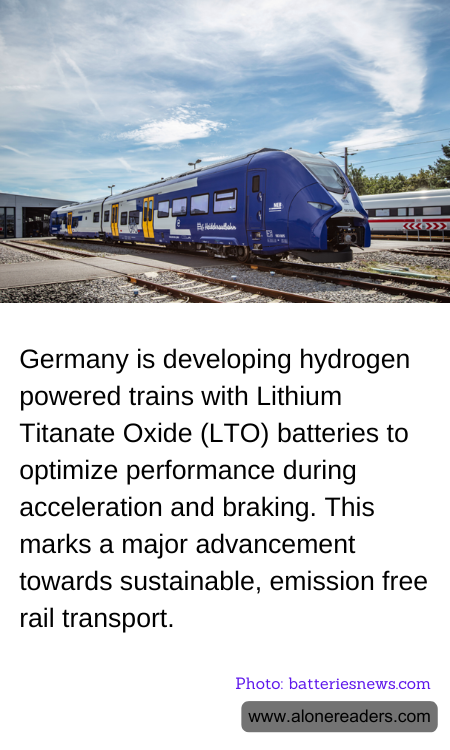
Germany is making significant strides in the realm of sustainable transportation with the development of hydrogen-powered trains equipped with Lithium Titanate Oxide (LTO) batteries. This innovative approach marks a major advancement in the pursuit of emission-free rail transport, offering a glimpse into a future where trains glide silently across the countryside, powered by clean energy.
The integration of hydrogen fuel cells with LTO batteries is a groundbreaking step in optimizing train performance, particularly during acceleration and braking. Hydrogen fuel cells generate electricity through a chemical reaction between hydrogen and oxygen, producing only water vapor as a byproduct. This makes them an environmentally friendly alternative to traditional diesel engines, which emit harmful pollutants. However, the real innovation lies in the use of LTO batteries, which are known for their rapid charge and discharge capabilities, long lifespan, and enhanced safety features.
During acceleration, the LTO batteries provide an immediate burst of power, complementing the steady energy supply from the hydrogen fuel cells. This synergy ensures that the trains can accelerate smoothly and efficiently, reducing energy wastage and enhancing overall performance. Conversely, during braking, the trains can harness regenerative braking technology to capture and store energy that would otherwise be lost as heat. This energy is then stored in the LTO batteries, ready to be used for the next acceleration, thus maximizing energy efficiency and minimizing operational costs.
Germany's commitment to developing hydrogen-powered trains is part of a broader strategy to reduce carbon emissions and transition to renewable energy sources. The country has long been a leader in environmental innovation, and this latest endeavor underscores its dedication to creating a sustainable future. By investing in clean rail technology, Germany is not only addressing the pressing issue of climate change but also setting a precedent for other nations to follow.
The introduction of hydrogen-powered trains with LTO batteries is expected to have a profound impact on the rail industry. It promises to reduce reliance on fossil fuels, decrease greenhouse gas emissions, and improve air quality, particularly in urban areas where rail transport is a major mode of commuting. Moreover, the quiet operation of these trains will contribute to noise reduction, enhancing the quality of life for communities situated near railway lines.
As Germany continues to pioneer in the field of sustainable transportation, the development of hydrogen-powered trains with LTO batteries represents a significant leap forward. It is a testament to the power of innovation and collaboration in addressing global environmental challenges. By embracing cutting-edge technology and renewable energy, Germany is paving the way for a cleaner, greener future in rail transport, inspiring other countries to embark on similar journeys towards sustainability.
