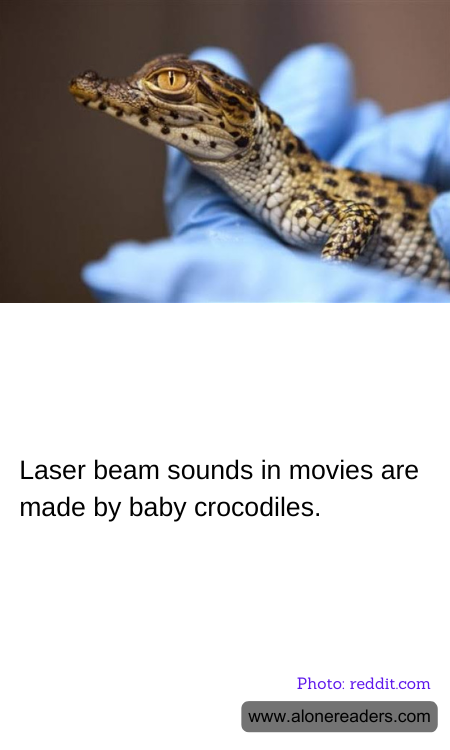
In the world of cinema, sound plays a pivotal role in creating an immersive experience for audiences. From the roar of a dragon to the hum of a spaceship, sound designers have long been the unsung heroes of film production, crafting auditory experiences that captivate and engage viewers. One of the more intriguing aspects of sound design is the creation of laser beam sounds, a staple in many science fiction films. Surprisingly, these futuristic sounds often have an unexpected source: baby crocodiles.
The idea of using baby crocodiles to produce laser beam sounds might seem far-fetched at first, but it is a testament to the creativity and resourcefulness of sound designers. Baby crocodiles, when communicating, produce a series of high-pitched, chirping sounds. These vocalizations are surprisingly similar to the zaps and zings associated with laser beams in movies. By recording and manipulating these sounds, sound designers can create the iconic laser effects that audiences have come to expect from their favorite sci-fi adventures.
This unique approach to sound design highlights the importance of thinking outside the box. In the quest to find the perfect sound, designers often turn to the natural world for inspiration. The use of baby crocodile sounds is just one example of how nature can provide unexpected solutions to creative challenges. By altering the pitch, speed, and tone of these recordings, sound designers can transform the chirps of a baby crocodile into the electrifying sound of a laser beam firing across the screen.
The process of creating these sounds is both an art and a science. Sound designers must have a keen ear for detail and a deep understanding of acoustics to manipulate natural sounds effectively. They often spend countless hours experimenting with different techniques to achieve the desired effect. This dedication to their craft is what allows them to produce sounds that are not only believable but also enhance the storytelling experience.
For audiences, the result is a seamless blend of visuals and audio that transports them to other worlds. The next time you watch a sci-fi movie and hear the familiar sound of a laser beam, take a moment to appreciate the ingenuity behind it. The chirps of a baby crocodile, transformed through the magic of sound design, are a reminder of the creativity and innovation that go into making the movies we love.
In conclusion, the use of baby crocodile sounds in creating laser beam effects is a fascinating example of the intersection between nature and technology in the film industry. It showcases the ingenuity of sound designers and their ability to find inspiration in the most unexpected places. As audiences continue to enjoy the thrilling sounds of laser battles on screen, they can now appreciate the surprising origins of these iconic auditory effects.
