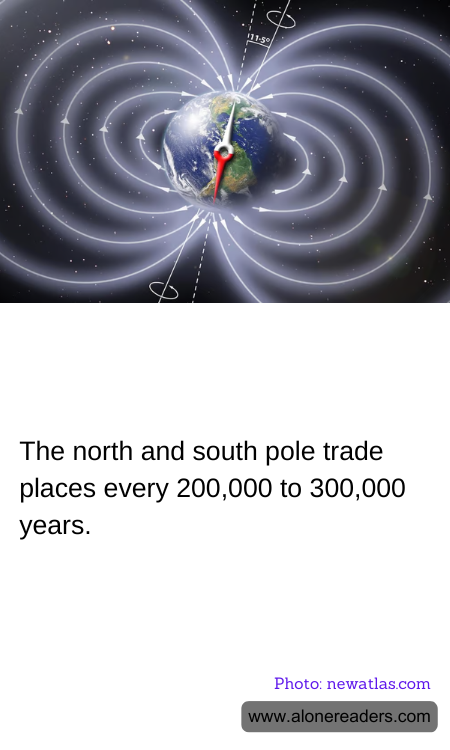
The phenomenon of the Earth's magnetic poles trading places, known as geomagnetic reversal, is a captivating aspect of our planet's dynamic nature. This process, occurring approximately every 200,000 to 300,000 years, involves the north and south magnetic poles switching positions. While this might sound alarming, it is a natural and gradual process that has been happening for millions of years.
The Earth's magnetic field is generated by the movement of molten iron within its outer core. This movement creates electric currents, which in turn produce magnetic fields. Over time, the complex flow of these currents can lead to changes in the magnetic field's orientation, eventually causing the poles to reverse. Although the exact mechanisms behind these reversals are still being studied, scientists have gathered substantial evidence from the geological record to understand their occurrence.
One of the most significant pieces of evidence for geomagnetic reversals comes from the study of volcanic rocks. As lava cools and solidifies, the minerals within it align with the Earth's magnetic field. By examining the orientation of these minerals in ancient rocks, scientists can trace the history of the Earth's magnetic field and identify periods when the poles have reversed. These studies have revealed that the last major reversal, known as the Brunhes-Matuyama reversal, occurred about 780,000 years ago.
Despite the dramatic nature of a pole reversal, it is not a sudden event. The process can take thousands of years to complete, during which the magnetic field may become weaker and more complex. This weakening could potentially have implications for life on Earth, as the magnetic field plays a crucial role in protecting the planet from harmful solar radiation. However, life has persisted through numerous reversals in the past, suggesting that any effects are likely to be manageable.
For modern society, the implications of a geomagnetic reversal are still being explored. A weakened magnetic field could affect satellite operations, navigation systems, and power grids. However, technological advancements and increased understanding of the Earth's magnetic field may help mitigate these challenges. Scientists continue to monitor the magnetic field closely, using satellites and ground-based observatories to track any changes that might indicate an impending reversal.
In conclusion, the trading of places by the north and south poles is a fascinating natural process that underscores the dynamic nature of our planet. While it may pose certain challenges, it is a testament to the resilience of life on Earth and the adaptability of human technology. As research continues, our understanding of geomagnetic reversals will undoubtedly deepen, providing further insights into the intricate workings of our planet.
