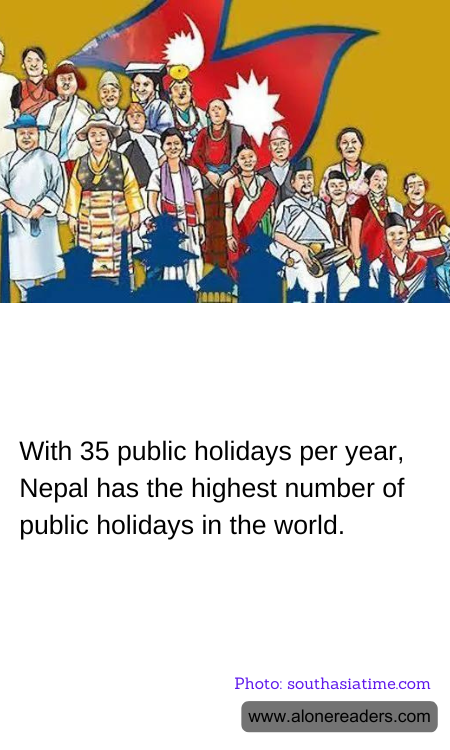
Nepal, a country nestled in the heart of the Himalayas, is renowned for its rich cultural tapestry and diverse traditions. One of the most intriguing aspects of this vibrant nation is its impressive number of public holidays. With 35 public holidays per year, Nepal holds the distinction of having the highest number of public holidays in the world. This abundance of holidays is a reflection of the country's deep-rooted cultural, religious, and historical heritage.
The plethora of public holidays in Nepal is largely attributed to its multicultural society. Home to a myriad of ethnic groups and religions, the country celebrates a wide array of festivals and events that honor different traditions and beliefs. Hinduism and Buddhism are the predominant religions, but the presence of other faiths such as Islam, Christianity, and indigenous beliefs contribute to the diverse holiday calendar. Major Hindu festivals like Dashain and Tihar, Buddhist celebrations such as Buddha Jayanti, and Muslim observances like Eid are all part of the national holiday schedule. Each of these festivals is celebrated with great enthusiasm and fervor, bringing communities together in a spirit of unity and joy.
In addition to religious festivals, Nepal also commemorates several national events and historical milestones. These include Republic Day, Constitution Day, and Martyrs' Day, each marking significant moments in the country's journey towards democracy and independence. The blend of religious and national holidays not only highlights Nepal's cultural richness but also serves as a reminder of its historical struggles and achievements.
The abundance of public holidays in Nepal has both positive and negative implications. On the one hand, these holidays provide citizens with ample opportunities to rest, rejuvenate, and spend quality time with family and friends. They also offer a chance for people to engage in cultural and religious practices, preserving traditions that have been passed down through generations. Moreover, these holidays attract tourists from around the world who are eager to experience Nepal's unique festivals and vibrant culture.
On the other hand, the high number of public holidays can pose challenges for the country's economy and productivity. Frequent breaks in the work schedule can disrupt business operations and affect economic output. However, many Nepali businesses and institutions have adapted to this rhythm, planning their activities around the holiday calendar to minimize disruptions.
In conclusion, Nepal's status as the country with the most public holidays is a testament to its cultural diversity and historical depth. While it presents certain challenges, the rich tapestry of festivals and celebrations plays a crucial role in maintaining the social fabric and cultural identity of the nation. For visitors and locals alike, these holidays offer a unique window into the soul of Nepal, showcasing its traditions, values, and the warmth of its people.
