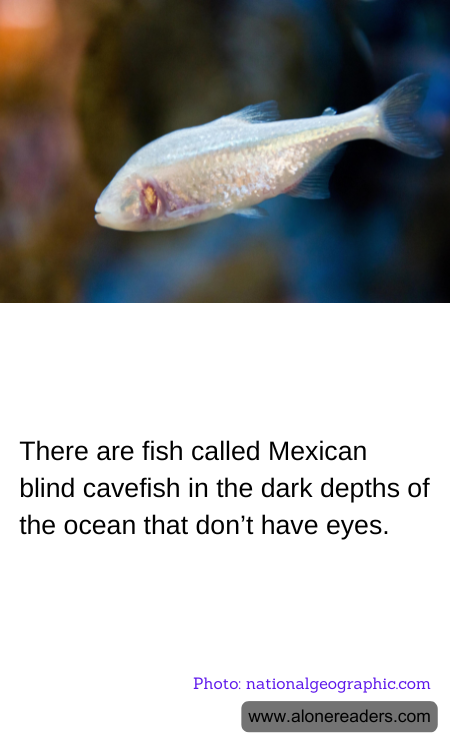
In the mysterious and shadowy depths of the ocean, where sunlight fails to penetrate, there exists a remarkable species known as the Mexican blind cavefish. These intriguing creatures have adapted to life in perpetual darkness, evolving in ways that defy conventional understanding of aquatic life. As their name suggests, these fish are blind, having lost their eyes through the course of evolution. This fascinating adaptation is a testament to nature's ability to mold life to suit even the most extreme environments.
The Mexican blind cavefish, scientifically known as Astyanax mexicanus, inhabit the subterranean waters of caves in northeastern Mexico. These environments are characterized by their complete absence of light, which has led to the fish's most notable feature: their lack of eyes. Over generations, these fish have evolved to thrive without vision, a trait that might seem disadvantageous at first glance. However, in the pitch-black world they inhabit, eyes would serve little purpose. Instead, these fish have developed other senses to navigate and survive in their unique habitat.
One of the most remarkable aspects of the Mexican blind cavefish is their heightened sense of touch and vibration. They possess an enhanced lateral line system, a series of sensory organs that detect changes in water pressure and movement. This system allows them to effectively "see" their surroundings through touch, enabling them to find food, avoid obstacles, and interact with other fish. Additionally, their sense of smell is highly developed, aiding them in locating food sources in the nutrient-scarce environment of the caves.
The evolution of the Mexican blind cavefish offers valuable insights into the adaptability of life and the processes of natural selection. By studying these fish, scientists gain a better understanding of how organisms can undergo significant physiological changes in response to environmental pressures. The loss of eyes in these fish is a prime example of how traits that are no longer beneficial can be phased out over time, allowing for the development of other, more advantageous characteristics.
Beyond their scientific significance, the Mexican blind cavefish also capture the imagination of those who learn about them. They serve as a reminder of the incredible diversity of life on Earth and the myriad ways in which species can adapt to their surroundings. In a world where light is often taken for granted, these fish thrive in darkness, showcasing the resilience and ingenuity of nature.
In conclusion, the Mexican blind cavefish are a captivating example of evolutionary adaptation. Their existence challenges our understanding of what is necessary for survival and highlights the extraordinary ways in which life can persist in even the most inhospitable environments. As we continue to explore the depths of our planet's oceans, these remarkable creatures remind us of the endless wonders that lie beneath the surface, waiting to be discovered.
