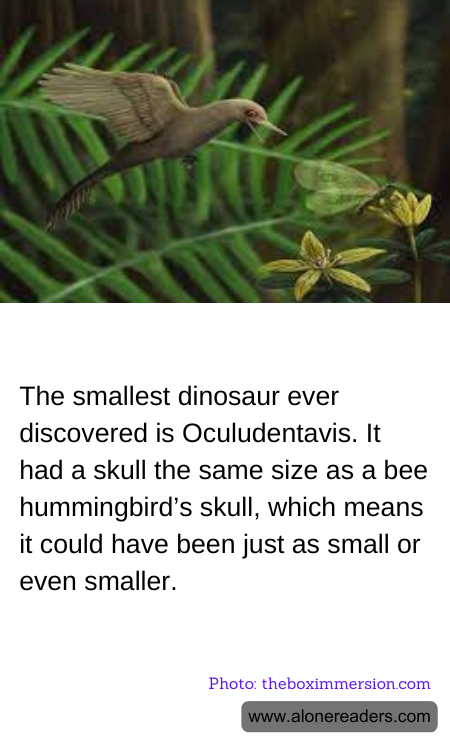
In the fascinating world of paleontology, discoveries often challenge our understanding of prehistoric life. One such remarkable find is Oculudentavis, a creature that has captured the imagination of scientists and the public alike due to its diminutive size. Unearthed in Myanmar, this tiny dinosaur has been identified as potentially the smallest dinosaur ever discovered, with a skull comparable in size to that of a bee hummingbird, the smallest living bird.
Oculudentavis, whose name translates to "eye-tooth bird," was initially discovered encased in amber, a natural time capsule that preserved its delicate features for millions of years. The fossilized skull measures a mere 1.4 centimeters in length, suggesting that the entire creature was incredibly small, possibly even smaller than the bee hummingbird. This discovery provides a unique glimpse into the diversity of dinosaur species and their evolutionary adaptations.
The anatomy of Oculudentavis is as intriguing as its size. The skull is characterized by a combination of features that are both bird-like and reptilian, including a long, tapering snout filled with sharp teeth. These features suggest that Oculudentavis was likely an insectivore, preying on small insects and other invertebrates. Its large eye sockets indicate that it may have had keen vision, possibly adapted for hunting in low-light conditions.
The discovery of Oculudentavis has sparked significant debate and interest within the scientific community. Initially classified as a bird-like dinosaur, some researchers have proposed that it might represent a new lineage of small-bodied dinosaurs or even a primitive bird. This ongoing discussion highlights the complexities of classifying ancient species and the continuous evolution of our understanding of the dinosaur-bird connection.
Beyond its scientific implications, Oculudentavis serves as a reminder of the incredible diversity of life that once inhabited our planet. Its tiny size challenges the traditional image of dinosaurs as massive, lumbering giants and underscores the adaptability and variety of these ancient creatures. The discovery also emphasizes the importance of amber fossils in providing insights into prehistoric ecosystems, preserving details that are often lost in other types of fossilization.
For website visitors of all ages, the story of Oculudentavis is a captivating example of how even the smallest discoveries can have a big impact on our understanding of the natural world. It invites us to imagine a time when dinosaurs of all shapes and sizes roamed the Earth, each playing a unique role in their ecosystems. As paleontologists continue to unearth new fossils, who knows what other tiny wonders might be waiting to be discovered, further enriching our knowledge of the distant past.
