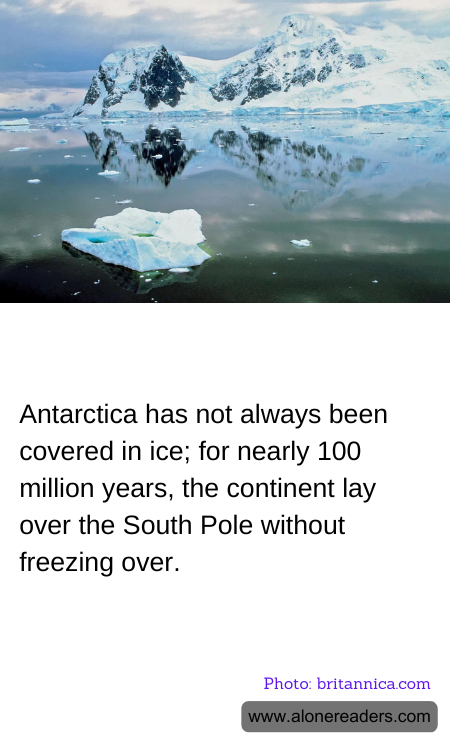
Antarctica, the icy expanse at the southernmost point of our planet, is often imagined as a perpetually frozen wilderness. However, this was not always the case. For nearly 100 million years, this continent lay over the South Pole without freezing over, presenting a stark contrast to the frozen landscape we know today. This intriguing chapter of Earth's history offers a glimpse into the dynamic nature of our planet's climate and geography.
During the Mesozoic Era, which spanned from about 252 to 66 million years ago, Antarctica was part of the supercontinent Gondwana. This massive landmass included what are now South America, Africa, India, Australia, and Antarctica. At that time, the climate was much warmer, and the continent was covered with lush forests and teeming with diverse life forms. Fossil evidence reveals that dinosaurs roamed the land, and plant life thrived in the temperate climate. This period of warmth was largely due to high levels of carbon dioxide in the atmosphere and the positioning of the continents, which allowed for warm ocean currents to circulate around Antarctica.
As the continents began to drift apart, Antarctica gradually moved to its current position over the South Pole. This shift, combined with a significant drop in atmospheric carbon dioxide levels, initiated a dramatic cooling trend. By the end of the Eocene Epoch, around 34 million years ago, ice sheets began to form on the continent. This marked the beginning of the Antarctic glaciation, a process that would eventually cover the continent in ice, shaping the environment we recognize today.
The transformation of Antarctica from a lush, green landscape to a frozen desert is a testament to the Earth's ever-changing climate. It serves as a reminder of the delicate balance that governs our planet's ecosystems and the profound impact that shifts in climate can have on the environment. Understanding this history is crucial, especially in the context of current climate change discussions. As we observe the effects of global warming today, the story of Antarctica underscores the importance of studying past climate events to better predict and mitigate future changes.
This fascinating history of Antarctica not only captivates the imagination but also provides valuable insights into the Earth's climatic past. It challenges us to consider the long-term impacts of our actions on the planet and inspires a deeper appreciation for the natural world. As we continue to explore and learn from this icy continent, we are reminded of the resilience and adaptability of life on Earth, as well as the responsibility we hold to preserve it for future generations.
