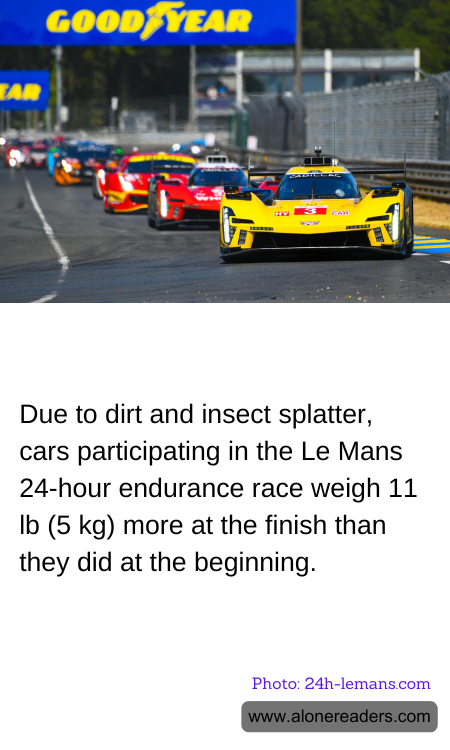
The Le Mans 24-hour endurance race is one of the most grueling and prestigious motorsport events in the world. Held annually in France, it challenges both the engineering prowess of the vehicles and the stamina of the drivers. While the race is renowned for its high-speed thrills and strategic depth, an intriguing aspect often overlooked is the accumulation of dirt and insect splatter on the cars, which can add a surprising amount of weight by the time the checkered flag is waved.
During the 24-hour marathon, cars are subjected to a relentless barrage of environmental elements. As they speed through the day and night, they encounter a variety of conditions that contribute to the gradual build-up of grime. The circuit, which combines public roads and a dedicated racetrack, exposes the vehicles to dust, debris, and insects. Over the course of the race, these elements adhere to the cars' surfaces, leading to an increase in weight that can be as much as 11 pounds (5 kilograms) by the end of the event.
This weight gain, while seemingly minor in the context of a car that weighs over a ton, can have subtle impacts on performance. The additional weight affects the car's aerodynamics and fuel efficiency, which are critical factors in a race where every second counts. Teams meticulously plan their pit stops and fuel loads, and the unexpected weight can slightly alter these calculations. However, the teams are well-prepared for such eventualities, and the cars are designed to handle these additional stresses without compromising their performance significantly.
The phenomenon of weight gain due to dirt and insects is a testament to the endurance aspect of the race. It highlights the importance of durability and resilience, not just in the mechanical components of the car, but also in the strategies employed by the teams. Engineers and designers work tirelessly to ensure that the cars can withstand the harsh conditions of the race, including the accumulation of unwanted weight. The cars are equipped with advanced materials and coatings that help minimize the impact of dirt and insects, but complete prevention is impossible given the nature of the race.
For spectators, this aspect of the race adds an extra layer of intrigue. It serves as a reminder of the challenges faced by the teams beyond the obvious mechanical and strategic hurdles. The Le Mans 24-hour race is not just a test of speed but also a battle against the elements, where even the smallest details can have a significant impact on the outcome.
In conclusion, the weight gain from dirt and insect splatter during the Le Mans 24-hour race is a fascinating detail that underscores the complexity and endurance required in this legendary event. It is a vivid illustration of how the natural environment interacts with human engineering, adding yet another dimension to the storied history of this iconic race.
