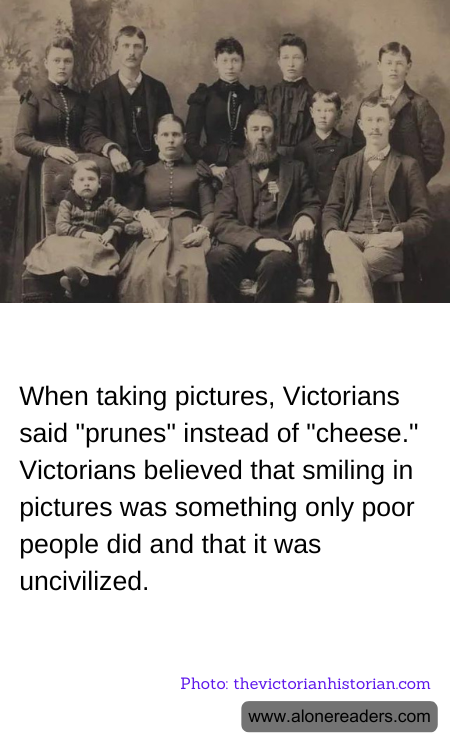
In the age of digital photography, where capturing a moment often involves a chorus of "say cheese," it's fascinating to delve into the photographic customs of the Victorian era, a time when the word "prunes" was the preferred prompt. This peculiar choice of word was not merely a whimsical alternative but was deeply rooted in the cultural norms and societal values of the time.
During the Victorian era, photography was a burgeoning art form, and having one's portrait taken was a serious affair. Unlike today, where a smile is synonymous with a photograph, Victorians approached the camera with a sense of solemnity. The word "prunes" was chosen deliberately; when spoken, it helped to form a small, tight-lipped expression, which was considered more dignified and refined. This expression was in stark contrast to the broad, toothy grins that are common in modern photography.
The reluctance to smile in photographs was influenced by several factors. Firstly, the long exposure times required by early cameras made it difficult to hold a smile without it appearing forced or unnatural. More importantly, however, was the prevailing belief that smiling was associated with the lower classes and was seen as a sign of frivolity or lack of sophistication. In Victorian society, where class distinctions were pronounced, maintaining an air of seriousness and composure was paramount. A somber expression was a marker of respectability and social standing.
Moreover, the cultural perception of photography itself played a role. Portraits were often seen as a reflection of one's character and moral fiber. A serious demeanor was thought to convey intelligence, self-control, and a sense of propriety. Smiling, on the other hand, was sometimes associated with madness or drunkenness, further discouraging its presence in formal portraits.
This aversion to smiling in photographs was not just limited to the Victorian era but was a common theme in early photography worldwide. It wasn't until the advent of more advanced photographic technology and changing social attitudes in the 20th century that smiling became the norm. As cameras became more accessible and exposure times shortened, photography shifted from a formal event to a more casual and spontaneous activity, allowing for the natural expressions we are accustomed to today.
The Victorian preference for saying "prunes" instead of "cheese" offers a glimpse into the social mores and cultural values of a bygone era. It serves as a reminder of how societal norms can shape even the most mundane aspects of life, such as how we pose for a photograph. While the stiff, unsmiling portraits of the past may seem peculiar to us now, they reflect a time when the image was not just a snapshot of a moment but a carefully curated representation of one's social identity.
