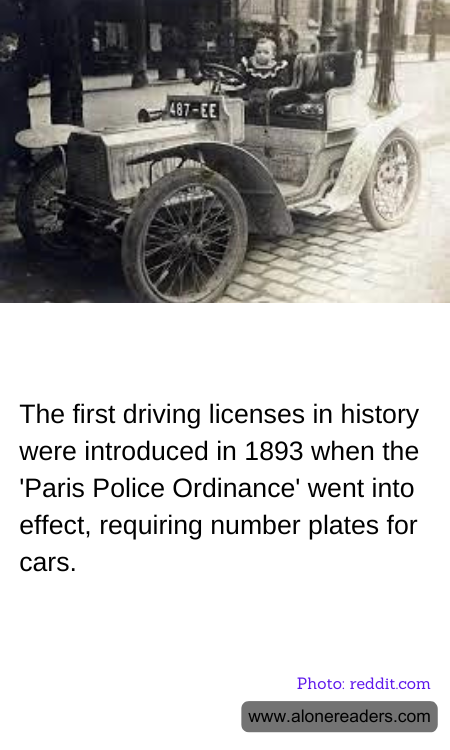
In the late 19th century, the world was on the cusp of a transportation revolution. The invention of the automobile was beginning to reshape how people thought about travel and mobility. Amidst this backdrop of innovation, a significant milestone in the history of driving was achieved in 1893 with the introduction of the first driving licenses. This development was part of the 'Paris Police Ordinance,' a regulation that marked a new era in road safety and vehicle identification.
Before the ordinance, the burgeoning number of automobiles on the roads of Paris posed new challenges for city officials. The absence of standardized regulations meant that anyone could operate a vehicle, leading to potential chaos on the streets. The Paris Police Ordinance was a pioneering step towards addressing these issues. It required drivers to obtain a license, ensuring that they possessed the necessary skills and knowledge to operate a vehicle safely. This was a crucial move in promoting road safety and protecting both drivers and pedestrians.
In addition to mandating driving licenses, the ordinance also introduced the requirement for number plates on cars. This was a groundbreaking concept at the time, as it allowed for the identification of vehicles and their owners. Number plates served as a means of accountability, making it easier for authorities to track vehicles involved in accidents or violations. This system of identification laid the groundwork for modern vehicle registration processes, which are now a standard practice worldwide.
The introduction of driving licenses and number plates in Paris was not just a local phenomenon; it set a precedent that would soon be adopted by other cities and countries. As automobiles became more prevalent, the need for regulation and oversight became increasingly apparent. The Paris Police Ordinance demonstrated the importance of establishing a framework for vehicle operation and ownership, a concept that has evolved significantly over the years.
Today, driving licenses are a fundamental aspect of road safety, ensuring that drivers meet specific standards before getting behind the wheel. The requirement for number plates has also become a universal practice, providing a reliable method for vehicle identification and law enforcement. The foresight of the Parisian authorities in 1893 laid the foundation for these essential components of modern transportation systems.
As we reflect on the history of driving licenses, it is clear that the Paris Police Ordinance was a visionary step towards creating safer and more organized roads. This early regulation not only addressed the immediate challenges of its time but also paved the way for future advancements in vehicle regulation and road safety. The legacy of this ordinance continues to influence how we approach driving and vehicle identification today, underscoring the importance of thoughtful regulation in the face of technological progress.
