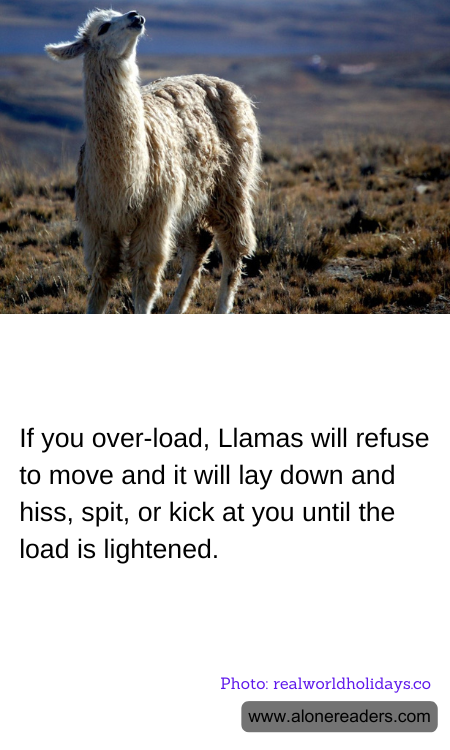
Llamas, with their gentle demeanor and expressive eyes, have long been cherished as pack animals in the Andean regions of South America. These resilient creatures are known for their ability to traverse rugged terrains while carrying supplies, making them invaluable companions for travelers and herders alike. However, despite their strength and endurance, llamas have a clear limit to how much they can carry. When this limit is exceeded, llamas have a unique way of expressing their displeasure: they simply refuse to move.
Unlike some animals that might push through discomfort, llamas are quite assertive in communicating when they are overburdened. If a llama feels that its load is too heavy, it will lay down and refuse to budge. This behavior is not just a stubborn refusal; it is a protective mechanism that prevents injury and exhaustion. By laying down, the llama ensures that it does not strain its muscles or joints, which could lead to long-term health issues.
In addition to lying down, llamas have a repertoire of behaviors to express their dissatisfaction. They may hiss, spit, or even kick if they feel threatened or overwhelmed by the weight they are carrying. Spitting, in particular, is a well-known llama trait, often used as a defense mechanism. While it might seem unpleasant, it is an effective way for llamas to communicate their discomfort and demand attention to their needs.
Understanding and respecting a llama's limits is crucial for anyone working with these animals. Typically, a healthy adult llama can carry about 25 to 30 percent of its body weight. Exceeding this can lead to the aforementioned behaviors, as well as potential harm to the animal. It is essential for handlers to be attentive and responsive, ensuring that the load is appropriate and that the llama is comfortable.
This behavior underscores the importance of empathy and respect in human-animal interactions. Llamas, like all animals, have their own ways of communicating, and it is our responsibility to listen and respond appropriately. By doing so, we not only ensure the well-being of the animals but also foster a harmonious relationship that benefits both parties.
In conclusion, the refusal of llamas to move when overloaded is a testament to their intelligence and self-preservation instincts. It serves as a reminder that animals, despite their utility, are sentient beings with their own needs and limits. By acknowledging and respecting these limits, we can ensure that llamas continue to be reliable and cherished companions in our journeys.
