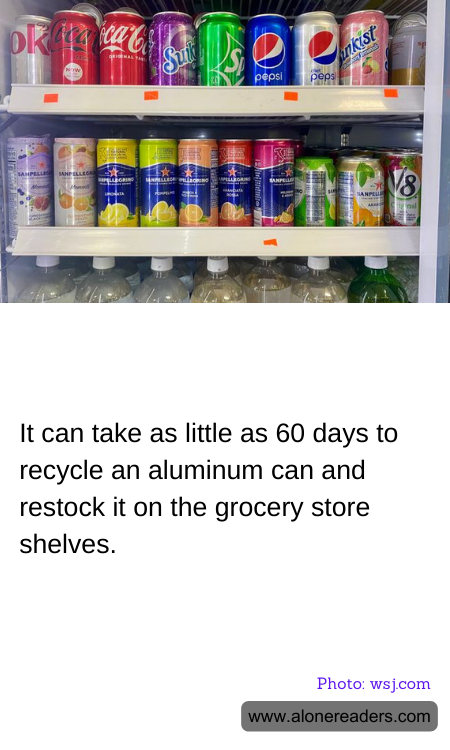
Recycling is a process that has become an integral part of our efforts to protect the environment and conserve resources. Among the various materials that can be recycled, aluminum stands out as a particularly efficient and sustainable option. Remarkably, it can take as little as 60 days for an aluminum can to be recycled and returned to grocery store shelves, ready for purchase once again. This rapid turnaround not only highlights the efficiency of the recycling process but also underscores the importance of recycling aluminum for environmental sustainability.
Aluminum is a unique material in that it can be recycled indefinitely without losing its quality. This means that the same piece of aluminum can be reused over and over again, reducing the need for new raw materials and minimizing the environmental impact of production. The process begins when consumers place their used aluminum cans into recycling bins. These cans are then collected and transported to recycling facilities, where they are cleaned, sorted, and shredded into small pieces. This is the first step in a journey that will see them transformed and back on store shelves in a matter of weeks.
Once shredded, the aluminum pieces are melted down in a furnace, removing any coatings or impurities. The molten aluminum is then poured into molds to form large blocks known as ingots. These ingots are subsequently rolled out into thin sheets, which are then used to manufacture new cans. The entire process, from collection to the production of new cans, is highly energy-efficient. In fact, recycling aluminum saves up to 95% of the energy required to produce new aluminum from raw materials. This energy savings translates into significant reductions in greenhouse gas emissions, making aluminum recycling a key component in efforts to combat climate change.
The speed and efficiency of aluminum recycling are not just beneficial for the environment; they also have economic advantages. The quick turnaround time means that manufacturers can keep up with consumer demand without the need for extensive storage or production delays. Moreover, the energy savings associated with recycling aluminum help to keep production costs down, which can lead to lower prices for consumers.
In conclusion, the ability to recycle an aluminum can and have it back on store shelves in as little as 60 days is a testament to the efficiency and sustainability of the recycling process. By choosing to recycle aluminum, consumers play a crucial role in conserving resources, reducing energy consumption, and minimizing environmental impact. As we continue to strive for a more sustainable future, the simple act of recycling an aluminum can is a powerful step in the right direction.
