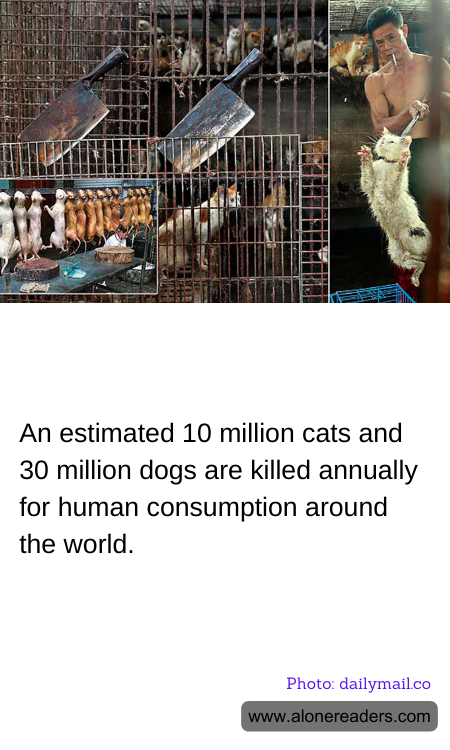
The consumption of cats and dogs as food is a practice that has sparked significant debate and concern across the globe. It is estimated that around 10 million cats and 30 million dogs are killed each year for human consumption. This practice is most prevalent in certain parts of Asia, including countries like China, South Korea, and Vietnam, where eating these animals is part of traditional culinary customs. However, it is important to note that this practice is not confined to Asia alone and can be found in various forms around the world.
The cultural significance of consuming cats and dogs varies greatly. In some regions, these animals are considered a delicacy, and their meat is believed to have health benefits. However, the practice is increasingly coming under scrutiny due to growing awareness about animal rights and welfare. Many animal rights organizations argue that cats and dogs, often regarded as companion animals, should not be subjected to such treatment. They emphasize the need for humane treatment of all animals and advocate for the adoption of more ethical dietary practices.
Efforts to curb the consumption of cats and dogs have gained momentum in recent years. Activists and organizations are working tirelessly to raise awareness about the issue and push for legislative changes. In some countries, these efforts have led to significant progress. For instance, Taiwan became the first Asian country to ban the consumption of dog and cat meat in 2017. Similarly, in South Korea, there is a growing movement to end the dog meat trade, with increasing public support for such measures.
The debate over the consumption of cats and dogs also highlights broader issues related to animal welfare and cultural sensitivity. While it is essential to respect cultural traditions, there is a growing consensus that certain practices need to be re-evaluated in light of modern ethical standards. This includes ensuring that animals are treated with dignity and respect, regardless of their role in human society.
Education and awareness are key components in addressing this complex issue. By fostering a greater understanding of the cultural, ethical, and health implications of consuming cats and dogs, it is possible to encourage more humane practices. This involves not only advocating for legal reforms but also promoting alternative dietary choices that do not involve the suffering of animals.
Ultimately, the goal is to create a world where all animals are treated with compassion and respect. While the journey towards this ideal is fraught with challenges, the growing global movement against the consumption of cats and dogs is a testament to the power of collective action and the enduring belief in a more humane future.
