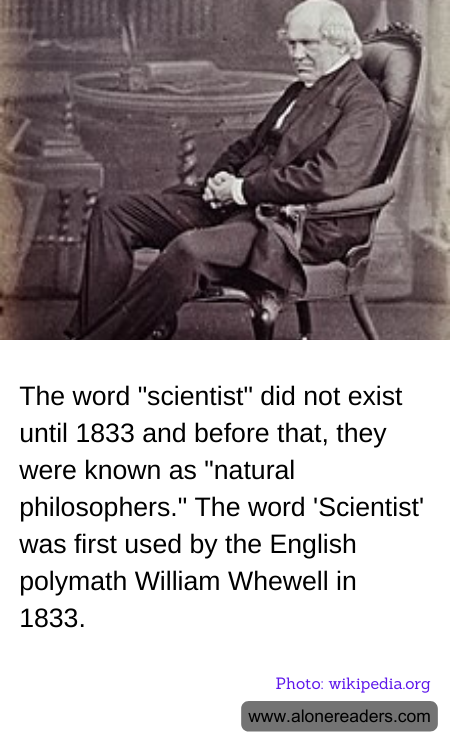
In the realm of intellectual pursuits, the term "scientist" is now ubiquitous, conjuring images of individuals in lab coats conducting experiments or making groundbreaking discoveries. However, this term is a relatively modern invention, first coined in 1833 by the English polymath William Whewell. Before this linguistic innovation, those who engaged in the study of the natural world were known as "natural philosophers."
The transition from "natural philosopher" to "scientist" marks a significant shift in how society conceptualizes the pursuit of knowledge. Natural philosophy, as it was known, encompassed a broad range of inquiries into the workings of the universe, from the movement of celestial bodies to the properties of earthly materials. This term reflected a time when the boundaries between different fields of study were less rigid, and the pursuit of knowledge was seen as a holistic endeavor.
William Whewell, a man of many talents, recognized the need for a new term to describe those who dedicated their lives to scientific inquiry. At the time, the field was rapidly evolving, with new discoveries and methodologies emerging that distinguished it from the philosophical traditions of the past. Whewell's introduction of the word "scientist" was not merely a semantic change but a reflection of the growing specialization and professionalization within the field. It acknowledged the distinct methodologies and empirical approaches that were becoming the hallmark of scientific investigation.
The adoption of the term "scientist" also coincided with the rise of the scientific method as a systematic way of exploring natural phenomena. This method emphasized observation, experimentation, and the formulation of hypotheses, setting science apart from other forms of philosophical inquiry. As such, the new term helped to establish a clearer identity for those engaged in scientific work, distinguishing them from philosophers, theologians, and other scholars.
The impact of this linguistic shift is still felt today. The term "scientist" carries with it a sense of authority and expertise, reflecting the rigorous standards and methodologies that underpin scientific research. It has become a symbol of progress and innovation, representing humanity's quest to understand and harness the forces of nature for the betterment of society.
In essence, the creation of the word "scientist" by William Whewell was more than just a linguistic milestone; it was a recognition of the changing landscape of intellectual inquiry. It marked the emergence of science as a distinct and vital domain of human endeavor, one that continues to shape our understanding of the world and drive technological and societal advancements. As we look to the future, the legacy of this simple yet profound word reminds us of the importance of curiosity, exploration, and the relentless pursuit of knowledge.
