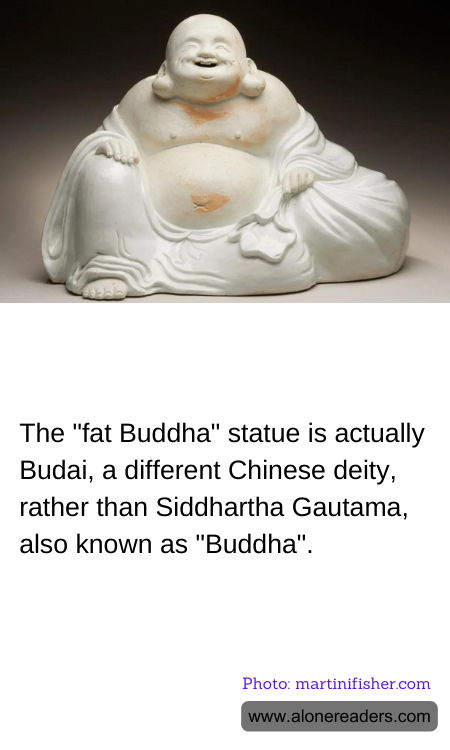
In many Western interpretations of Buddhism, the image of a jolly, rotund figure often comes to mind when one thinks of the Buddha. This figure, commonly referred to as the "fat Buddha," is actually a representation of Budai, a distinct figure in Chinese folklore, rather than Siddhartha Gautama, the historical Buddha. Understanding this distinction not only enriches our appreciation of cultural diversity but also deepens our understanding of Buddhist iconography.
Budai, also known as the Laughing Buddha, is a figure rooted in Chinese tradition and is often associated with contentment and abundance. He is typically depicted as a portly, bald man with a warm smile, carrying a cloth sack filled with treasures. Budai is considered a symbol of happiness, prosperity, and good fortune. His image is commonly found in Chinese restaurants and homes, where he is believed to bring luck and joy to those who encounter him.
In contrast, Siddhartha Gautama, the founder of Buddhism, is traditionally depicted in a more serene and meditative posture. Born a prince in ancient India, Siddhartha renounced his royal life in search of enlightenment and ultimately became the Buddha, or "the awakened one." His teachings form the foundation of Buddhism, focusing on the Four Noble Truths and the Eightfold Path as a means to overcome suffering and achieve spiritual liberation. The historical Buddha is often portrayed as slender, with elongated earlobes and a calm demeanor, reflecting his spiritual insight and wisdom.
The confusion between Budai and Siddhartha Gautama may stem from the widespread presence of Budai's image in popular culture, often marketed as a symbol of Buddhism. However, Budai is more accurately a representation of Maitreya, the future Buddha in Buddhist eschatology, who is expected to appear on Earth, achieve complete enlightenment, and teach the pure Dharma. In this context, Budai serves as a reminder of the joy and hope associated with the future arrival of Maitreya.
Recognizing the distinction between Budai and Siddhartha Gautama is essential for appreciating the rich tapestry of Buddhist and Chinese cultural traditions. While both figures hold significant spiritual meaning, they represent different aspects of belief and practice. Budai embodies the joy and abundance of life, while Siddhartha Gautama represents the path to enlightenment and the cessation of suffering.
In conclusion, the "fat Buddha" is not the historical Buddha but rather Budai, a beloved figure in Chinese folklore. By understanding the unique roles and representations of Budai and Siddhartha Gautama, we can better appreciate the diversity within Buddhist traditions and the cultural nuances that shape our perceptions of these revered figures. This awareness not only fosters greater respect for cultural heritage but also enriches our own spiritual journeys.
