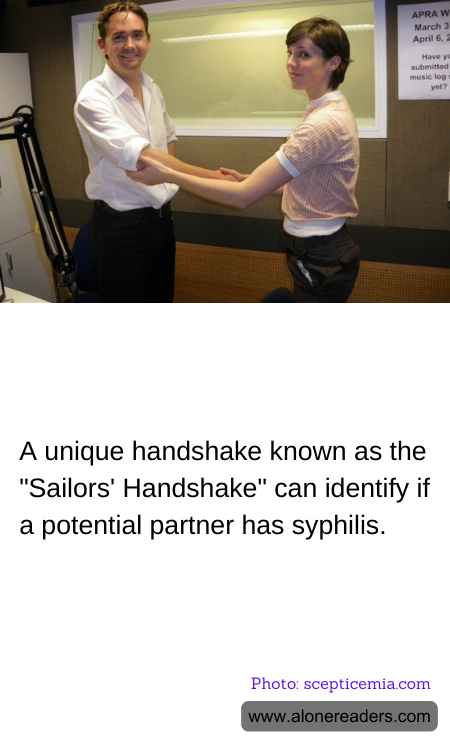
In the vast tapestry of maritime history, sailors have long been known for their unique customs and traditions. Among these is a little-known practice called the "Sailors' Handshake," a peculiar ritual that reportedly served a practical purpose: identifying whether a potential partner might have syphilis. This handshake, steeped in folklore and maritime legend, offers a fascinating glimpse into the resourcefulness and adaptability of sailors in times when medical knowledge and resources were limited.
The origins of the Sailors' Handshake are somewhat murky, but it is believed to have emerged during the Age of Sail, when sailors spent extended periods at sea and often sought companionship in port cities. Syphilis, a sexually transmitted infection that was rampant during this era, posed a significant health risk. With limited medical treatment options available, sailors needed a way to protect themselves from contracting the disease. The handshake was a discreet method to assess a partner's health without causing offense or embarrassment.
The handshake itself was a subtle yet clever maneuver. Sailors would extend their hand in greeting, but instead of a standard shake, they would apply gentle pressure to specific points on the partner's hand. This pressure was intended to detect any unusual swelling or tenderness, which were considered potential indicators of syphilis. If the handshake revealed any abnormalities, the sailor might choose to avoid further contact, thereby reducing the risk of infection.
While the effectiveness of the Sailors' Handshake as a diagnostic tool is debatable, its existence highlights the ingenuity of sailors in addressing health concerns with the limited resources at their disposal. It also underscores the importance of community knowledge and shared practices in navigating the challenges of life at sea. In an era before antibiotics and modern medical diagnostics, sailors relied on their wits and the collective wisdom of their peers to safeguard their health.
Today, the Sailors' Handshake serves as a curious historical footnote, a reminder of the lengths to which people have gone to protect themselves from disease. It also reflects the broader human tendency to develop creative solutions to pressing problems, even in the absence of scientific understanding. While modern medicine has rendered such practices obsolete, the story of the Sailors' Handshake remains a testament to the resilience and resourcefulness of those who lived and worked on the high seas.
In a world where health concerns continue to evolve, the Sailors' Handshake is a quaint reminder of the past, illustrating how people have always sought ways to protect themselves and their communities. It is a story that resonates with the timeless human quest for safety and well-being, transcending the boundaries of time and place.
