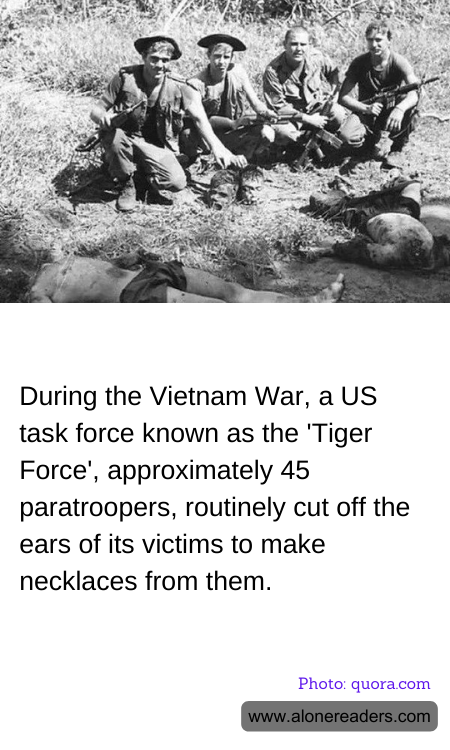
The Vietnam War, a conflict marked by its complexity and controversy, is often remembered for its intense battles and the profound impact it had on both the Vietnamese and American people. Among the many stories that emerged from this tumultuous period, the actions of a U.S. Army unit known as "Tiger Force" stand out for their brutality and the moral questions they raise about wartime conduct.
Tiger Force was a reconnaissance unit of the 101st Airborne Division, consisting of approximately 45 paratroopers. Their mission was to engage in search-and-destroy operations against the Viet Cong and North Vietnamese forces. However, reports and investigations have revealed that some members of this unit engaged in acts that went far beyond the rules of engagement and the ethical boundaries of warfare.
One of the most disturbing practices attributed to Tiger Force was the routine mutilation of their victims. It has been documented that some soldiers in the unit cut off the ears of Vietnamese civilians and combatants alike, stringing them together to create macabre necklaces. This gruesome practice was not only a violation of military law but also a stark departure from the principles of humanity and respect for life that are supposed to guide soldiers even in the heat of battle.
The actions of Tiger Force were part of a broader pattern of misconduct during the Vietnam War, where the lines between enemy combatants and civilians were often blurred. The war's guerrilla nature, with combatants frequently indistinguishable from non-combatants, created an environment ripe for such atrocities. The pressure to produce body counts and demonstrate success in a war with no clear front lines further exacerbated the situation, leading some soldiers to commit acts that would haunt them long after the war ended.
The revelations about Tiger Force came to light decades after the war, prompting investigations and raising questions about accountability and justice. Despite the severity of the allegations, no members of the unit were prosecuted, highlighting the challenges of addressing war crimes and the often slow wheels of military justice.
The story of Tiger Force serves as a somber reminder of the potential for dehumanization in war and the importance of maintaining ethical standards even in the most challenging circumstances. It underscores the need for rigorous training and oversight to prevent such violations and to ensure that military operations are conducted with respect for human rights and dignity.
As we reflect on the Vietnam War and its legacy, the actions of Tiger Force remind us of the moral complexities of warfare and the enduring need for vigilance in upholding the values that define humanity. The lessons learned from these dark chapters in history continue to inform military conduct and the pursuit of justice in conflicts around the world.
