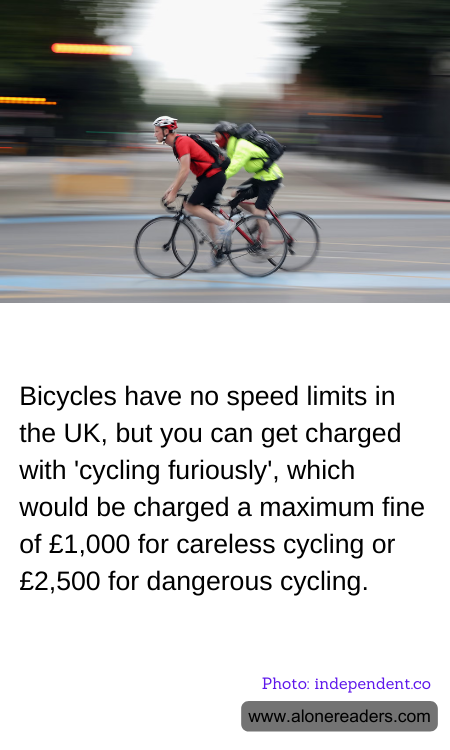
In the United Kingdom, bicycles are a popular mode of transport, offering an eco-friendly and healthy alternative to motor vehicles. However, unlike cars and motorcycles, bicycles are not subject to specific speed limits. This lack of regulation might suggest that cyclists have free rein to pedal as fast as they wish, but this is not entirely the case. While there are no explicit speed limits for cyclists, the law still holds them accountable for their actions on the road, particularly through the charge of "cycling furiously."
The term "cycling furiously" might sound archaic, but it is a legal concept that addresses the behavior of cyclists who ride recklessly or at excessive speeds, endangering themselves and others. This charge is rooted in the broader legal framework that governs road safety, ensuring that all road users, regardless of their mode of transport, adhere to standards that promote safety and responsibility.
Cyclists found guilty of careless cycling can face a maximum fine of £1,000. Careless cycling typically involves actions that may not be intentionally harmful but still pose a risk, such as failing to pay attention to the road or not adhering to traffic signals. On the other hand, dangerous cycling, which involves more severe breaches of safety, such as riding at high speeds in crowded areas or ignoring pedestrian crossings, can result in a heftier fine of up to £2,500.
These penalties underscore the importance of responsible cycling. While the freedom to ride without speed limits might seem liberating, it comes with the responsibility to ensure the safety of all road users. Cyclists must remain vigilant, particularly in urban areas where pedestrian traffic is high and the potential for accidents increases. The law aims to balance the benefits of cycling with the need for public safety, encouraging cyclists to enjoy their rides while being mindful of their surroundings.
Education and awareness are crucial in promoting safe cycling practices. Many cycling organizations and local councils offer training programs that teach cyclists about road safety, proper signaling, and the importance of wearing protective gear. These initiatives help foster a culture of safety and respect on the roads, benefiting both cyclists and the wider community.
In conclusion, while bicycles in the UK are not bound by specific speed limits, cyclists are still expected to ride responsibly. The charges of careless and dangerous cycling serve as reminders that safety should always be a priority. By adhering to these principles, cyclists can enjoy the freedom of the open road while contributing to a safer environment for everyone.
