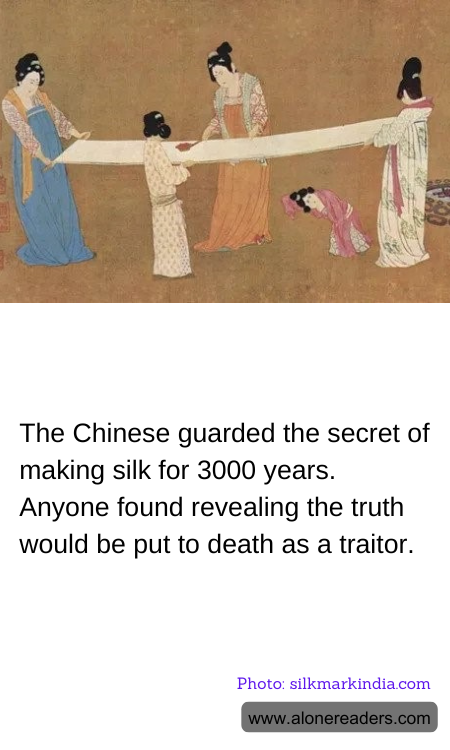
For thousands of years, silk has been synonymous with luxury, elegance, and mystery. Its shimmering texture and delicate strength have captivated people across the globe. Yet, for nearly three millennia, the secret of silk production was one of the most closely guarded secrets in history, held tightly by the Chinese. This fascinating tale of secrecy and intrigue is a testament to the value and allure of silk.
The origins of silk production, or sericulture, trace back to ancient China, around 2700 BCE. According to Chinese legend, Empress Leizu discovered silk when a silkworm cocoon fell into her tea, unraveling to reveal a long, delicate thread. This serendipitous discovery led to the cultivation of silkworms and the development of silk weaving techniques. Recognizing the value of this exquisite fabric, the Chinese emperors deemed it a state secret, ensuring that the knowledge of silk production remained within the borders of China.
The Chinese monopoly on silk production was not just an economic strategy but also a matter of national security. The fabric was highly coveted, and its trade became a significant source of wealth for the Chinese empire. To protect this lucrative industry, the Chinese imposed severe penalties on anyone who dared to reveal the secrets of silk production. The punishment for such treason was death, a testament to the lengths the Chinese were willing to go to preserve their monopoly.
Despite these stringent measures, the allure of silk was too great to be contained indefinitely. Over time, the secret of silk production began to spread beyond China’s borders, often through daring acts of espionage and smuggling. One of the most famous tales involves two monks who, in the 6th century, smuggled silkworm eggs out of China hidden in their hollowed-out walking sticks, eventually bringing them to the Byzantine Empire. This marked the beginning of silk production in the West, breaking the Chinese monopoly.
The story of silk is not just about a luxurious fabric but also about the lengths to which a civilization will go to protect its cultural and economic treasures. The Chinese mastery of silk production and their ability to keep it a secret for so long is a remarkable chapter in the history of trade and innovation. Today, silk remains a symbol of elegance and sophistication, a testament to its enduring appeal and the rich history behind its creation.
In modern times, silk production has spread across the world, with countries like India, Japan, and Thailand becoming significant producers. However, the legacy of the Chinese silk monopoly continues to fascinate historians and enthusiasts alike, serving as a reminder of the power of knowledge and the lengths to which people will go to protect it. The story of silk is a timeless tale of intrigue, innovation, and the enduring human desire for beauty and luxury.
