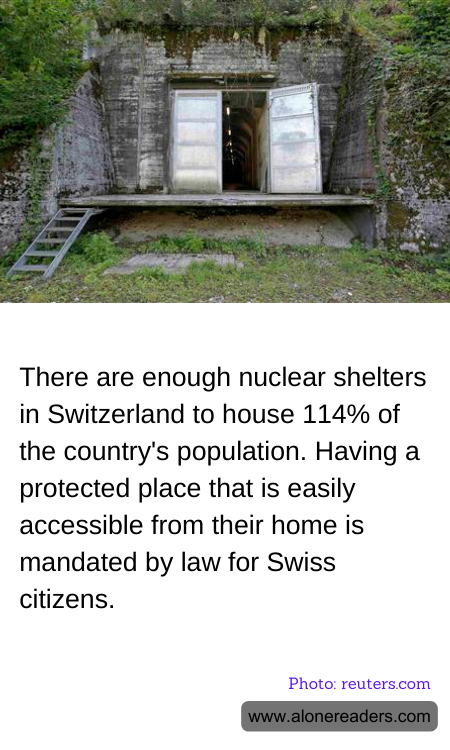
Switzerland is renowned for its breathtaking landscapes, robust economy, and high standard of living. However, beneath its serene surface lies a remarkable infrastructure that speaks to the country's commitment to preparedness and safety: an extensive network of nuclear shelters. In fact, Switzerland boasts enough nuclear shelters to accommodate 114% of its population, a testament to its meticulous planning and foresight.
This impressive statistic is not merely a result of historical happenstance but is deeply rooted in Swiss law. Since the Cold War era, Switzerland has mandated that every citizen must have access to a protected place that is easily reachable from their home. This legal requirement has led to the construction of thousands of shelters across the country, integrated into residential buildings, schools, hospitals, and even public spaces. The Swiss government has ensured that these shelters are well-maintained and ready for use in the event of a nuclear threat or other emergencies.
The Swiss approach to civil defense is unique and reflects a broader cultural emphasis on neutrality and self-reliance. While many countries have scaled back their civil defense programs following the end of the Cold War, Switzerland has continued to invest in and update its shelter infrastructure. This commitment is not only about protecting its citizens but also about maintaining a sense of security and preparedness in an unpredictable world.
For Swiss citizens, the presence of these shelters is a reassuring aspect of daily life. Knowing that there is a safe place nearby in case of an emergency provides peace of mind and reinforces the sense of community and collective responsibility. The shelters are equipped with essential supplies and are regularly inspected to ensure they meet safety standards. This level of preparedness is a reflection of the Swiss ethos of meticulous planning and attention to detail.
In a world where geopolitical tensions can rise unexpectedly, Switzerland's comprehensive network of nuclear shelters stands as a model of proactive planning. It highlights the importance of being prepared for unforeseen events and underscores the value of investing in infrastructure that prioritizes the safety and well-being of citizens. As other nations grapple with the challenges of modern security threats, Switzerland's approach offers valuable insights into the benefits of long-term planning and the peace of mind that comes with being prepared.
