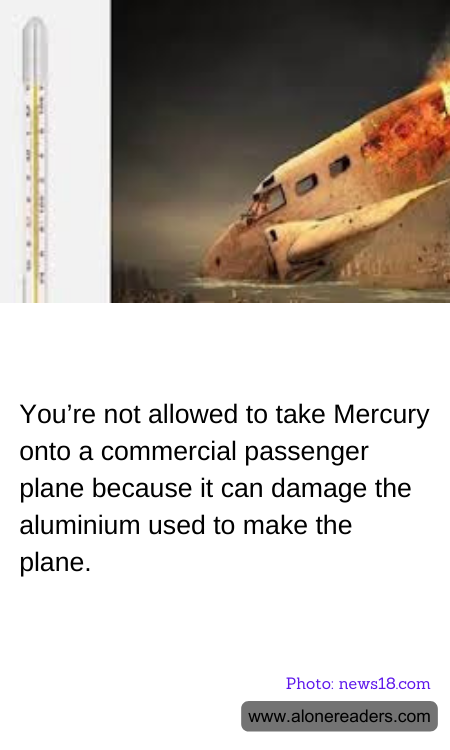
Mercury, a silvery liquid metal, is known for its unique properties and historical uses in thermometers, barometers, and various industrial applications. However, its presence on commercial passenger planes is strictly prohibited. This restriction is not merely a precautionary measure for passenger safety but is rooted in the potential damage mercury can inflict on the aircraft itself, particularly the aluminum components that form the backbone of modern aviation.
Aluminum is a favored material in aircraft construction due to its lightweight nature and strength, which are crucial for efficient flight and fuel economy. However, aluminum has a significant vulnerability when it comes into contact with mercury. The interaction between these two elements can lead to a process known as amalgamation. When mercury spills onto aluminum, it can penetrate the protective oxide layer that naturally forms on the metal's surface. This penetration disrupts the structural integrity of the aluminum, causing it to weaken and become brittle.
The amalgamation process can lead to severe corrosion, compromising the aircraft's structural components. This is particularly concerning in the pressurized environment of an airplane, where even minor structural weaknesses can have catastrophic consequences. The risk is not just theoretical; historical incidents have demonstrated the destructive potential of mercury on aluminum. In one notable case, a mercury spill on an aircraft required extensive repairs and grounding of the plane, highlighting the seriousness of such an event.
Beyond the structural risks, mercury is also a hazardous substance to human health. It is toxic and can cause severe health issues if inhaled or ingested. This dual threat to both the aircraft and its passengers underscores why mercury is banned from commercial flights. The aviation industry takes these risks seriously, implementing strict regulations to prevent mercury from being brought on board, whether in luggage or as part of any equipment.
Airlines and airport security personnel are trained to identify and manage potential mercury threats. Passengers are advised to be aware of the items they pack and to avoid carrying any products that might contain mercury. This includes certain types of thermometers, barometers, and older batteries, which might still use mercury in their construction.
In conclusion, the prohibition of mercury on commercial flights is a critical safety measure. It protects the structural integrity of the aircraft and ensures the safety and well-being of passengers and crew. As aviation technology continues to advance, maintaining stringent safety standards remains a top priority, ensuring that the skies remain safe for all travelers. Understanding the reasons behind such regulations helps passengers appreciate the complexities of air travel and the meticulous care taken to ensure their safety.
