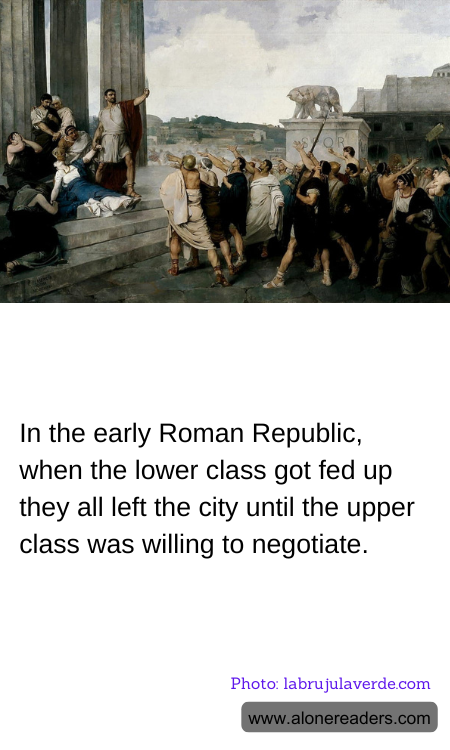
In the early days of the Roman Republic, a unique form of protest emerged that would shape the political landscape of ancient Rome. This was the secessio plebis, or the secession of the plebeians, a powerful demonstration by the lower class, or plebeians, who withdrew from the city en masse to force the ruling patricians to address their grievances. This act of collective bargaining was not only a testament to the plebeians' unity but also a pivotal moment in the development of Roman political rights.
The Roman Republic, established in 509 BCE, was initially dominated by the patricians, the aristocratic families who held most of the political power. The plebeians, on the other hand, were the commoners, comprising the majority of the population but with limited political influence. Over time, the plebeians grew increasingly frustrated with their lack of rights and the patricians' control over the political and legal systems. This frustration was exacerbated by economic hardships, such as debt and land distribution issues, which disproportionately affected the lower classes.
The secessio plebis was a bold strategy employed by the plebeians to address these inequalities. By withdrawing from the city and refusing to work or serve in the military, the plebeians effectively brought the functioning of the Republic to a halt. This non-violent form of protest forced the patricians to negotiate, as the absence of the plebeians threatened the stability and security of Rome. The first recorded secession occurred in 494 BCE, when the plebeians retreated to the Sacred Mount outside Rome. This act of defiance led to the creation of the office of the Tribune of the Plebs, a significant political concession that granted the plebeians their own representatives with the power to veto decisions made by the Senate.
The success of the secessio plebis set a precedent for future negotiations between the plebeians and patricians. Over the years, several more secessions took place, each resulting in further concessions and reforms. These included the publication of the Twelve Tables, Rome's first written code of laws, and the eventual opening of high political offices to plebeians. The secessions were instrumental in the gradual democratization of the Roman Republic, as they highlighted the importance of compromise and the need for a more inclusive political system.
The legacy of the secessio plebis is a testament to the power of collective action and the importance of standing up for one's rights. It serves as an early example of how marginalized groups can leverage their collective strength to effect change and secure a more equitable society. The plebeians' struggle for equality and representation in the Roman Republic remains a powerful reminder of the enduring quest for justice and fairness in human history.
