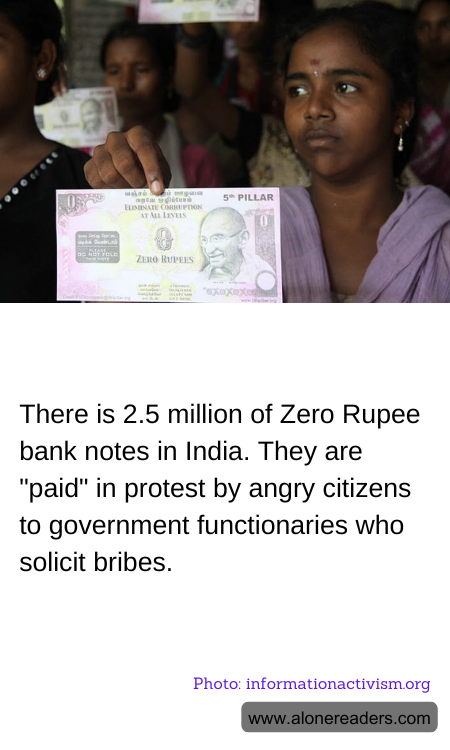
In a country where the fight against corruption is a daily struggle, an innovative and symbolic form of protest has emerged in India: the Zero Rupee note. This unique concept was introduced by the non-governmental organization 5th Pillar in 2007 as a tool for citizens to express their frustration against the pervasive culture of bribery. Since its inception, approximately 2.5 million Zero Rupee notes have circulated throughout the country, serving as a powerful statement against corruption.
The Zero Rupee note is designed to resemble the 50 Rupee note, complete with similar colors and design elements, but it carries a bold message: "I promise to neither accept nor give a bribe." This message is printed in multiple languages, ensuring it reaches a broad audience across India's diverse linguistic landscape. The note is not legal tender, but its impact is profound, as it empowers citizens to take a stand against corrupt practices without resorting to confrontation or violence.
The idea behind the Zero Rupee note is simple yet effective. When a government official or public servant solicits a bribe, the citizen can hand over this note instead of money. This act of protest serves as a reminder to the official that their actions are being watched and that the public is unwilling to comply with corrupt demands. The note acts as a deterrent, encouraging officials to reconsider their actions and promoting accountability within public services.
The success of the Zero Rupee note lies in its ability to raise awareness and spark conversations about corruption. It has become a symbol of resistance and a tool for education, prompting discussions in schools, communities, and workplaces about the importance of integrity and transparency. By distributing these notes, 5th Pillar and other anti-corruption advocates aim to empower citizens to demand their rights and hold public officials accountable.
While the Zero Rupee note is a creative approach to combating corruption, it is not a standalone solution. It complements broader efforts to reform systems, enforce anti-corruption laws, and promote ethical governance. However, its symbolic power cannot be underestimated. It serves as a reminder that change begins with individual actions and that collective efforts can lead to significant societal shifts.
In a world where corruption often feels insurmountable, the Zero Rupee note offers a glimmer of hope. It demonstrates that even small acts of defiance can contribute to a larger movement for justice and integrity. As more citizens embrace this form of protest, the message becomes clear: the people of India are committed to building a future free from the shackles of corruption, one Zero Rupee note at a time.
