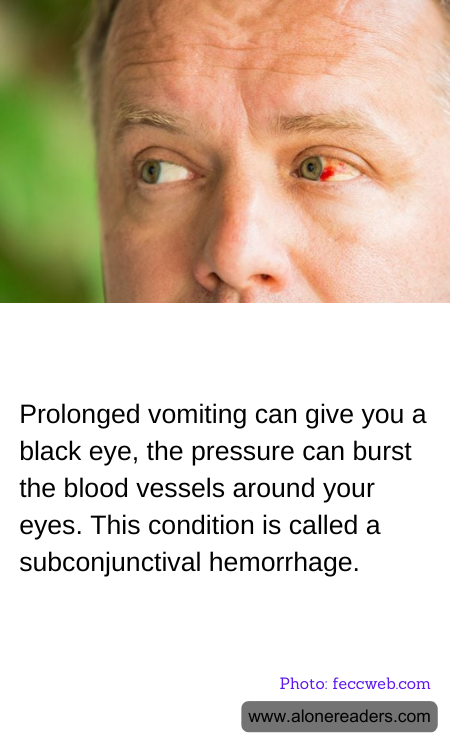
Vomiting is an unpleasant experience that most people encounter at some point in their lives. While it is often a temporary and self-limiting condition, prolonged or severe vomiting can lead to unexpected complications, one of which is the development of a black eye. This surprising outcome is due to a condition known as a subconjunctival hemorrhage, where the pressure from vomiting causes blood vessels around the eyes to burst.
When a person vomits forcefully, the body experiences a significant increase in pressure, particularly in the head and neck region. This pressure can be so intense that it causes tiny blood vessels, or capillaries, around the eyes to rupture. The result is a subconjunctival hemorrhage, which manifests as a red or dark patch on the white part of the eye. Although it may look alarming, this condition is generally harmless and does not affect vision. However, when the bleeding extends to the surrounding tissues, it can lead to the appearance of a black eye.
A black eye resulting from vomiting is not as common as those caused by trauma or injury, but it serves as a reminder of the interconnectedness of our bodily systems. The skin around the eyes is particularly delicate and prone to showing signs of trauma or stress. When blood vessels burst, the blood pools under the thin skin, leading to the characteristic bruising and discoloration associated with a black eye.
While a subconjunctival hemorrhage and the resulting black eye are usually not serious, they can be distressing and may require medical attention if accompanied by other symptoms. If someone experiences persistent vomiting, it is crucial to address the underlying cause, whether it be a viral infection, food poisoning, or another medical condition. Staying hydrated and seeking medical advice can help manage the symptoms and prevent further complications.
In most cases, a subconjunctival hemorrhage will resolve on its own within a week or two, as the body gradually reabsorbs the blood. During this time, it is advisable to avoid activities that could exacerbate the condition, such as heavy lifting or straining. Applying a cold compress to the affected area can help reduce swelling and discomfort.
Understanding the potential consequences of prolonged vomiting can encourage individuals to seek timely medical intervention and take preventive measures. While a black eye from vomiting is not a common occurrence, being aware of this possibility can help alleviate concerns and guide appropriate responses. As with any health issue, maintaining open communication with healthcare professionals is key to ensuring overall well-being.
