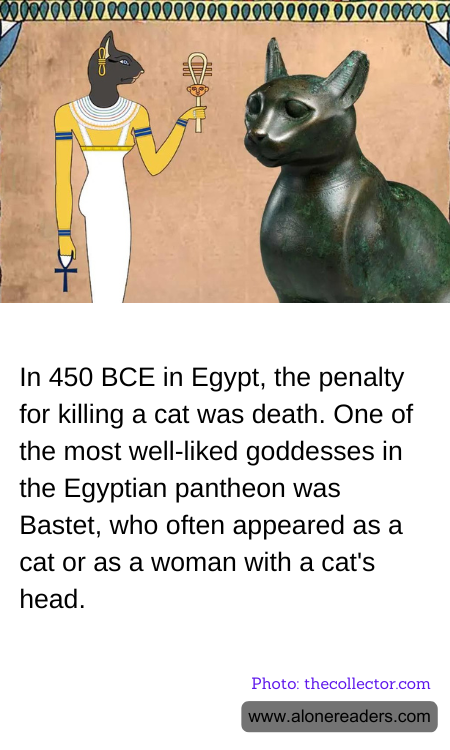
In ancient Egypt, the reverence for cats was unparalleled, a sentiment deeply rooted in the cultural and religious fabric of the society. By 450 BCE, this veneration had reached such heights that the penalty for killing a cat, whether intentional or accidental, was death. This severe punishment underscores the profound respect and sacred status cats held in Egyptian civilization, a status largely attributed to the goddess Bastet.
Bastet, one of the most beloved deities in the Egyptian pantheon, was often depicted as a lioness or as a woman with the head of a domestic cat. Her dual nature symbolized both the nurturing and protective aspects of femininity. Initially, Bastet was portrayed as a fierce lioness, embodying the warrior spirit and the protective nature of a mother. However, over time, her image softened into that of a domestic cat, reflecting her role as a gentle guardian of the home and family.
The ancient Egyptians believed that cats were the earthly embodiments of Bastet, and thus, they were treated with the utmost care and respect. Cats were cherished not only for their spiritual significance but also for their practical role in society. They were adept hunters, keeping homes and granaries free from vermin, which was crucial in a society heavily reliant on agriculture. This practical benefit further cemented their status as sacred animals.
The reverence for cats was so ingrained in Egyptian society that harming them was considered an affront to the gods. Historical accounts suggest that even during times of war, Egyptians would rather surrender than risk harming a cat. This deep-seated respect was not limited to living cats; even in death, they were honored. Cats were often mummified and buried with their owners, ensuring they could accompany them into the afterlife.
Bastet's influence extended beyond the household. She was celebrated in grand festivals, where music, dance, and feasting were central activities. These festivals were not only a tribute to Bastet but also a communal celebration of life and protection. The city of Bubastis, the center of Bastet's worship, became a significant cultural and religious hub, attracting pilgrims from across the land.
The ancient Egyptians' devotion to cats and the goddess Bastet is a testament to their deep connection with the natural world and their understanding of the delicate balance between humanity and the divine. This reverence has left a lasting legacy, influencing how cats are perceived in various cultures even today. The story of Bastet and the sacred status of cats in ancient Egypt continue to captivate and inspire, reminding us of the enduring bond between humans and animals.
