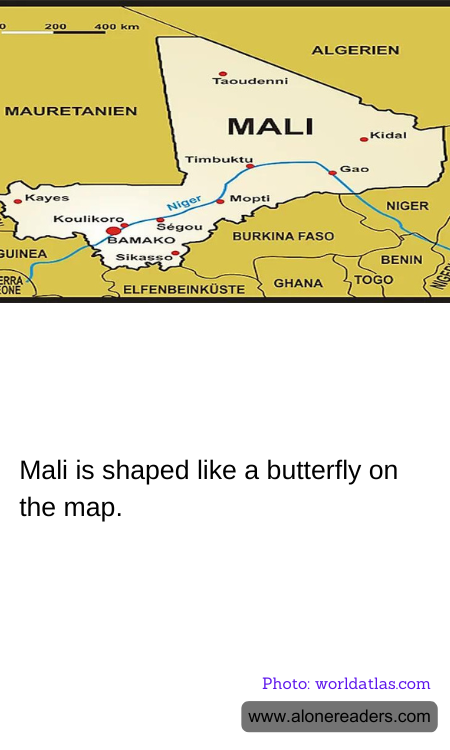
Mali, a landlocked country in West Africa, is often noted for its unique geographical shape that resembles a butterfly. This intriguing comparison has captured the imagination of cartographers and geography enthusiasts alike. The butterfly shape of Mali is not just a whimsical observation but also a reflection of the country's diverse landscapes and rich cultural heritage.
The northern part of Mali forms the expansive wings of the butterfly, stretching into the Sahara Desert. This region is characterized by vast sand dunes and arid landscapes, where the Tuareg people, known for their nomadic lifestyle, have roamed for centuries. The Sahara's harsh environment contrasts sharply with the more fertile lands found in the southern part of the country, which make up the body of the butterfly. Here, the Niger River flows, providing a lifeline for agriculture and supporting the livelihoods of many Malians.
Mali's butterfly shape is more than just a geographical curiosity; it symbolizes the country's diverse cultural tapestry. The nation is home to a variety of ethnic groups, each contributing to its rich cultural mosaic. From the ancient city of Timbuktu, once a thriving center of Islamic learning and trade, to the vibrant music scene in Bamako, Mali's capital, the country's cultural heritage is as varied as its landscapes.
The butterfly shape also serves as a metaphor for Mali's potential for transformation and growth. Despite facing challenges such as political instability and economic difficulties, Mali has shown resilience and a capacity for renewal. The country's rich history, including the legacy of the Mali Empire and its renowned rulers like Mansa Musa, continues to inspire a sense of pride and identity among its people.
For those who view maps with a sense of wonder, Mali's butterfly shape offers a reminder of the beauty and complexity of our world. It invites us to look beyond the lines and borders to appreciate the stories and histories that shape nations. As Mali continues to navigate its path forward, the butterfly shape serves as a symbol of hope and the possibility of positive change.
In conclusion, Mali's butterfly shape is more than a cartographic curiosity; it is a reflection of the country's diverse landscapes, rich cultural heritage, and potential for transformation. Whether seen on a map or experienced through its vibrant culture and history, Mali offers a unique perspective on the beauty and complexity of our world.
