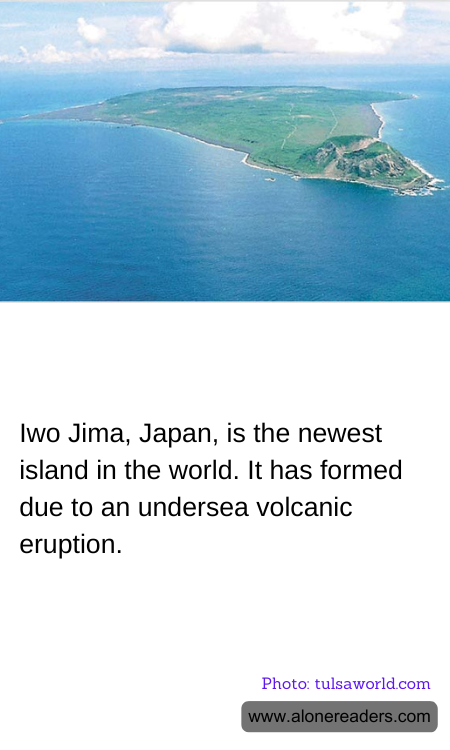
In a remarkable display of nature's power, the world has witnessed the birth of a new island, Iwo Jima, Japan, emerging from the depths of the ocean due to an undersea volcanic eruption. This geological marvel has captured the attention of scientists, nature enthusiasts, and curious minds worldwide, offering a rare glimpse into the dynamic processes that shape our planet.
Located in the Pacific Ocean, Iwo Jima is part of the Ogasawara Archipelago, a region known for its volcanic activity. The island's formation is attributed to a series of undersea volcanic eruptions, which began spewing molten rock and ash from the ocean floor. Over time, these eruptions accumulated enough material to break the surface of the water, giving birth to a new landmass. This phenomenon is a testament to the Earth's ever-changing landscape, where the forces of nature continually reshape the environment.
The emergence of Iwo Jima is not only a geological wonder but also a significant event for scientific research. Volcanologists and geologists are keenly observing the island's development, studying the volcanic activity and its impact on the surrounding marine ecosystem. The formation of new land provides a unique opportunity to understand the processes of island creation and the role of volcanic activity in shaping the Earth's surface. Researchers are particularly interested in the types of volcanic materials being expelled and how they contribute to the island's growth.
While Iwo Jima's formation is a fascinating natural event, it also serves as a reminder of the potential hazards associated with volcanic activity. The region's history is marked by eruptions that have had significant impacts on the environment and human populations. As such, monitoring the volcanic activity around Iwo Jima is crucial to ensuring the safety of nearby communities and understanding the potential risks posed by future eruptions.
The new island also presents an opportunity for ecological study. As it stabilizes, scientists will observe how life begins to colonize the barren landscape. The process of ecological succession, where plants and animals gradually establish themselves, will offer insights into how ecosystems develop from scratch. This natural laboratory will help scientists understand the resilience and adaptability of life in the face of new and challenging environments.
Iwo Jima's emergence is a captivating chapter in the story of our planet, illustrating the dynamic and ever-evolving nature of the Earth. It serves as a reminder of the powerful forces at work beneath the ocean's surface and the continuous cycle of destruction and creation that shapes our world. As the island continues to evolve, it will undoubtedly provide valuable lessons and inspire awe in those who study and appreciate the wonders of nature.
