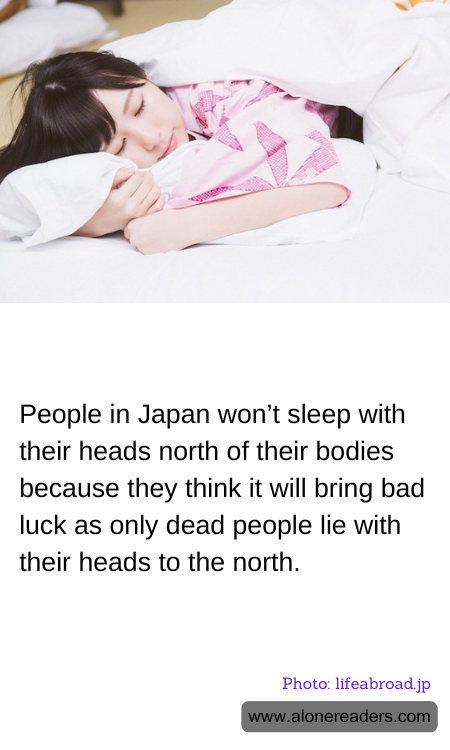
In the rich tapestry of Japanese culture, where tradition and superstition often intertwine, there exists a fascinating belief regarding the orientation of one's sleeping position. Many Japanese people avoid sleeping with their heads pointing north, a practice deeply rooted in cultural superstition and respect for the deceased. This belief, known as "kita-makura," translates to "north pillow" and is considered to bring bad luck because it mirrors the way bodies are traditionally laid out at funerals, with the head facing north.
The origins of this superstition can be traced back to Buddhist customs and the influence of feng shui, an ancient Chinese practice that emphasizes harmony between individuals and their environment. In Buddhism, it is believed that Buddha passed away while lying with his head to the north, a position that has since been associated with death and mourning. As a result, aligning oneself in this manner during sleep is thought to invite misfortune or even premature death.
In Japanese households, the arrangement of furniture and sleeping positions often reflect these cultural beliefs. Many people take care to position their beds or futons in a way that avoids the north-facing orientation. This practice is not merely a matter of personal preference but a reflection of a broader cultural respect for tradition and the spiritual world. It is a testament to the enduring influence of ancestral customs in contemporary Japanese life.
While some may dismiss this belief as mere superstition, it is important to recognize the cultural significance it holds. For many Japanese people, adhering to such practices is a way of honoring their heritage and maintaining a connection to their ancestors. It is also a reflection of the deep-seated respect for the deceased, which is a cornerstone of Japanese culture. This reverence is evident in various aspects of daily life, from the meticulous care given to ancestral graves to the annual observance of Obon, a festival dedicated to honoring the spirits of the dead.
Interestingly, the practice of avoiding a north-facing sleeping position is not unique to Japan. Similar beliefs can be found in other cultures, where the orientation of the body is thought to influence one's fortune or spiritual well-being. This shared human tendency to associate direction with destiny underscores the universal nature of such superstitions.
In a world increasingly driven by scientific reasoning, the persistence of beliefs like kita-makura highlights the enduring power of tradition and the human desire to find meaning in the unseen. For visitors to Japan, understanding these cultural nuances can provide a deeper appreciation for the country's rich heritage and the ways in which ancient beliefs continue to shape modern life. Whether or not one subscribes to the idea of directional sleeping, the practice serves as a reminder of the profound connection between culture, spirituality, and daily life in Japan.
