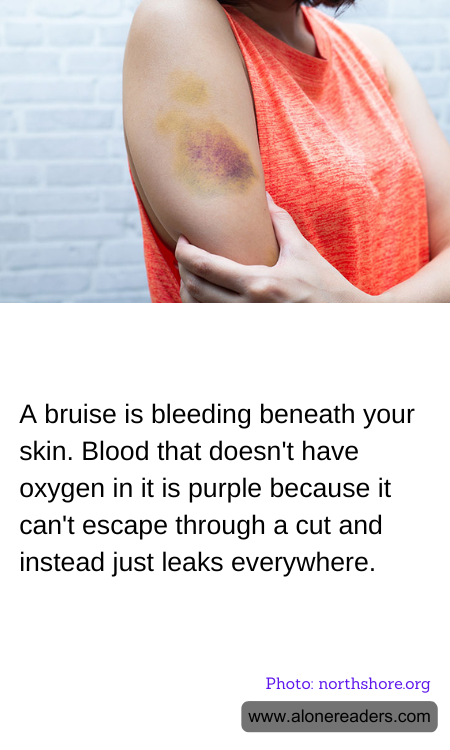
When we think of bruises, we often picture the familiar purplish-blue marks that appear on our skin after a bump or fall. But what exactly is happening beneath the surface when we see these colorful reminders of an injury? A bruise, medically known as a contusion, is essentially a form of internal bleeding where blood vessels are damaged, causing blood to leak into the surrounding tissues. Unlike a cut or scrape, where blood escapes through the skin, a bruise traps the blood beneath the skin, leading to its distinctive coloration.
The intriguing color of a bruise is largely due to the oxygen levels in the blood. Blood that is rich in oxygen appears bright red, which is why freshly oxygenated blood in our arteries looks vibrant. However, when blood loses its oxygen, it takes on a darker, purplish hue. This deoxygenated blood is what we see in a bruise. When the tiny capillaries under the skin are damaged, they release blood into the surrounding tissue. Since this blood is not exposed to the air, it doesn't get re-oxygenated, maintaining its darker color.
As the body begins to heal, the bruise undergoes a fascinating transformation. Initially, the bruise may appear red due to the fresh blood pooling under the skin. Within a day or two, it turns a deep blue or purple as the blood loses oxygen. Over time, the body breaks down the trapped blood cells, and the bruise changes color, often turning green or yellow before finally fading away. This color change is a result of the breakdown of hemoglobin, the protein in red blood cells that carries oxygen. As hemoglobin breaks down, it produces biliverdin (green) and bilirubin (yellow), which are responsible for the changing colors of a healing bruise.
Bruises are a natural part of the body's response to injury and are usually harmless, healing on their own within a couple of weeks. However, some people may bruise more easily than others due to factors like age, medications, or certain medical conditions. While most bruises are not a cause for concern, it's important to pay attention to any unusual bruising patterns or bruises that don't heal, as they could indicate an underlying health issue.
Understanding the science behind bruises can help demystify these common occurrences and remind us of the body's remarkable ability to heal itself. The next time you spot a bruise, consider it a colorful testament to the body's resilience and its intricate processes working tirelessly beneath the skin.
