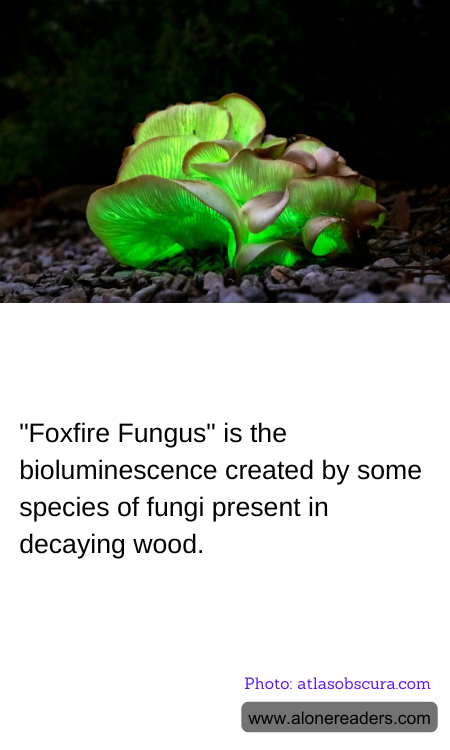
In the mysterious world of nature, where the ordinary often gives way to the extraordinary, the phenomenon of "foxfire" stands out as a captivating spectacle. This enchanting glow, emanating from certain species of fungi, transforms decaying wood into a canvas of luminescent beauty. Known scientifically as bioluminescence, foxfire is a natural light produced by living organisms, and in this case, it is the handiwork of some remarkable fungi.
Foxfire has intrigued humans for centuries, with its eerie glow often attributed to folklore and myth. In reality, this luminescence is a result of a chemical reaction within the fungi. The process involves luciferin, a light-emitting compound, and luciferase, an enzyme that catalyzes the reaction. When these two components interact in the presence of oxygen, they produce a soft, greenish light. This glow is not just a visual marvel but also serves a biological purpose. It is believed that the light attracts insects, which in turn help disperse the fungal spores, aiding in the reproduction and spread of the fungi.
The fungi responsible for foxfire are typically found in decaying wood, thriving in damp and dark environments. Species such as Armillaria mellea, commonly known as honey fungus, and Panellus stipticus are among the most well-known bioluminescent fungi. These organisms play a crucial role in the ecosystem by breaking down dead organic matter, recycling nutrients back into the soil, and supporting the growth of new plant life.
Foxfire's ethereal glow has not only fascinated scientists but has also inspired artists and storytellers. In literature and folklore, it has been depicted as everything from the mischievous play of fairies to the guiding lights for lost travelers. The phenomenon has also sparked scientific curiosity, leading researchers to explore its potential applications. Bioluminescent fungi are being studied for their possible use in sustainable lighting solutions and as biological markers in scientific research.
Despite its allure, foxfire is a rare sight, often requiring specific conditions to be visible. The glow is usually faint and best observed in complete darkness, away from artificial lights. For those fortunate enough to witness it, the experience is nothing short of magical, offering a glimpse into the hidden wonders of the natural world.
In a world increasingly dominated by artificial light, the gentle glow of foxfire serves as a reminder of nature's ingenuity and beauty. It invites us to pause and appreciate the delicate balance of life and decay, and the surprising ways in which life can illuminate even the darkest corners of the forest. Whether viewed as a scientific curiosity or a source of inspiration, foxfire continues to captivate the imagination, bridging the gap between the known and the mysterious.
