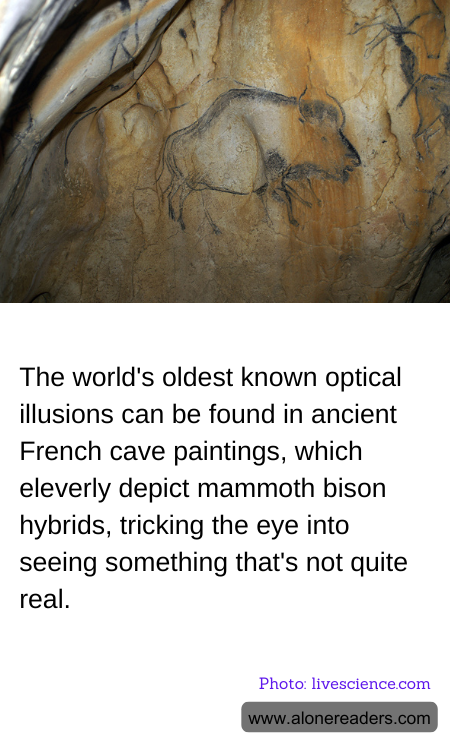
In the heart of France, nestled within the ancient caves of Lascaux and Chauvet, lies a fascinating glimpse into the minds of our prehistoric ancestors. These caves, renowned for their stunning array of Paleolithic art, hold more than just historical significance; they are home to some of the world's oldest known optical illusions. Among the intricate depictions of animals and human figures, one can find cleverly crafted images that challenge the viewer's perception, blending reality with imagination in a way that continues to captivate audiences today.
The most intriguing of these illusions are the depictions of mammoth-bison hybrids. These images, painted with remarkable skill and insight, play tricks on the eye, leading viewers to see creatures that are not quite real. The artists of these ancient times employed a sophisticated understanding of perspective and form, using the natural contours of the cave walls to enhance their illusions. By strategically placing lines and shapes, they created composite creatures that seem to shift and change as one moves through the cave, a testament to their ingenuity and artistic prowess.
These optical illusions serve as a reminder of the complex cognitive abilities of early humans. The ability to conceive and execute such illusions suggests a deep understanding of visual perception and an appreciation for the interplay between reality and imagination. It also highlights the role of art as a means of communication and storytelling, offering insights into the cultural and spiritual lives of these ancient communities.
The mammoth-bison hybrids are more than just artistic curiosities; they are a window into the past, revealing the creative spirit that has driven human innovation for millennia. These images invite us to ponder the motivations behind their creation. Were they part of a ritualistic practice, meant to invoke the power of the animals depicted? Or were they simply an expression of artistic exploration, a playful manipulation of form and space?
As we continue to study these ancient artworks, we gain a greater appreciation for the sophistication of early human societies. The optical illusions found in the French caves challenge our assumptions about prehistoric art, demonstrating that even tens of thousands of years ago, humans were capable of creating complex and thought-provoking works. These images remind us that the desire to explore and understand the world through art is a fundamental aspect of the human experience, one that transcends time and continues to inspire us today.
In a world where digital technology often dominates our visual experiences, the ancient optical illusions of the French caves offer a refreshing reminder of the enduring power of art to engage and enchant. They invite us to look beyond the surface, to question what we see, and to appreciate the boundless creativity that has always been a hallmark of human expression.
