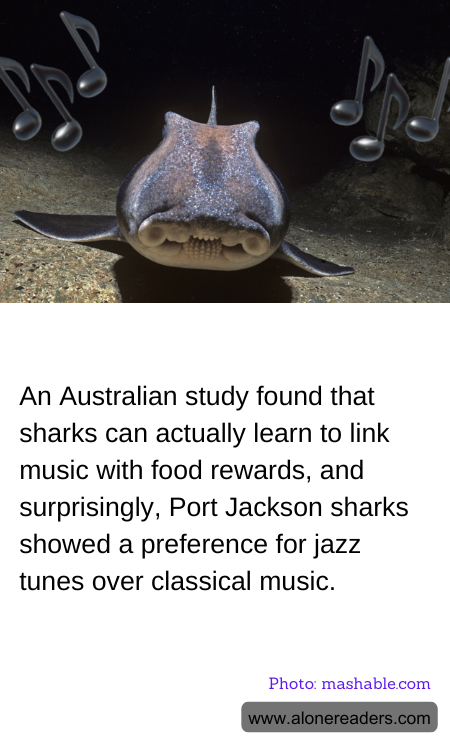
In a fascinating revelation from the marine world, an Australian study has uncovered that sharks, often perceived as solitary predators of the deep, possess the ability to learn and associate music with food rewards. This groundbreaking research not only challenges preconceived notions about the cognitive capabilities of these ancient creatures but also adds a surprising twist: Port Jackson sharks appear to have a preference for jazz over classical music.
The study, conducted by researchers at Macquarie University in Sydney, aimed to explore the learning abilities of sharks, a topic that has garnered limited attention compared to studies on terrestrial animals. The researchers employed a simple yet effective method to test the sharks' learning capabilities. They played different types of music in conjunction with food rewards to see if the sharks could associate a particular tune with the promise of a meal.
To the researchers' astonishment, the Port Jackson sharks demonstrated a clear ability to link the sound of jazz music with the arrival of food. This finding suggests that sharks can not only hear and differentiate between various types of music but can also form associations between auditory cues and rewards. The sharks' preference for jazz over classical music adds an intriguing layer to the study, hinting at the possibility that these marine animals might have more complex auditory preferences than previously thought.
The implications of this study are significant, as they open up new avenues for understanding the cognitive and sensory capabilities of sharks. Traditionally viewed as instinct-driven hunters, sharks are now being recognized for their potential to learn and adapt to new stimuli in their environment. This newfound understanding could have broader implications for shark conservation efforts, as it highlights the importance of considering the sensory and cognitive needs of these creatures in their natural habitats.
Moreover, the study serves as a reminder of the intricate and often surprising nature of animal intelligence. It challenges the stereotype of sharks as mere eating machines and encourages a more nuanced appreciation of their role in the marine ecosystem. By shedding light on the cognitive abilities of sharks, researchers hope to foster a greater sense of empathy and respect for these often-misunderstood animals.
In conclusion, the discovery that sharks can learn to associate music with food rewards, and their unexpected preference for jazz, underscores the complexity and adaptability of these marine predators. As researchers continue to delve into the mysteries of the ocean, studies like this one remind us of the endless wonders that lie beneath the waves and the importance of preserving the delicate balance of marine life.
