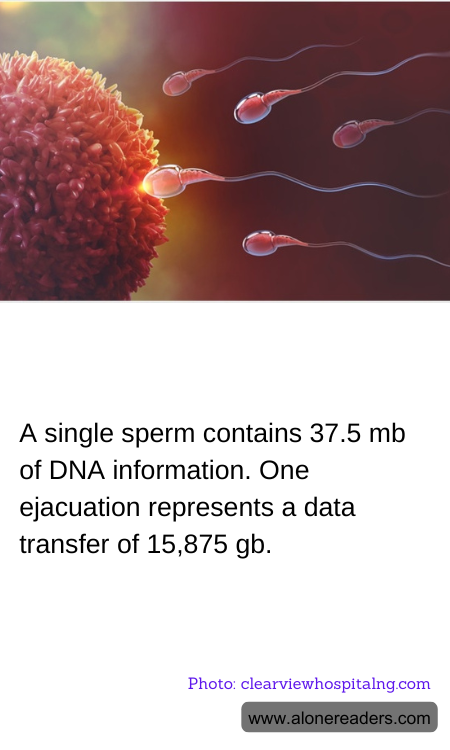
In the fascinating world of biology and genetics, the human body continues to reveal astonishing facts that often blur the lines between science and wonder. One such intriguing fact is that a single sperm cell contains approximately 37.5 megabytes of DNA information. When considering the sheer volume of sperm cells released during a single ejaculation, this translates to a staggering data transfer of about 15,875 gigabytes. This comparison not only highlights the complexity of human reproduction but also offers a unique perspective on the digital age we live in.
The concept of DNA as a carrier of information is not new. DNA, or deoxyribonucleic acid, is the hereditary material in humans and almost all other organisms. It carries the genetic instructions used in the growth, development, functioning, and reproduction of all known living organisms and many viruses. The idea of quantifying this genetic information in terms of data storage is a modern approach that bridges biology with technology, providing a tangible way to appreciate the intricacies of life.
To put this into perspective, the average high-definition movie is about 4 gigabytes. Thus, a single ejaculation, which can contain up to 500 million sperm cells, represents a data transfer equivalent to approximately 3,968 high-definition movies. This analogy not only underscores the vast amount of genetic information involved in human reproduction but also emphasizes the efficiency and compactness of biological data storage.
The comparison to digital data also serves as a reminder of the incredible advancements in technology and how they can be used to better understand natural processes. As we continue to explore the depths of genetic information, the parallels between biological systems and digital technology become increasingly apparent. This understanding can lead to breakthroughs in fields such as bioinformatics, genetic engineering, and personalized medicine, where the manipulation and analysis of genetic data are crucial.
Moreover, this perspective encourages a greater appreciation for the complexity and elegance of life itself. The fact that such a vast amount of information is packed into something as microscopic as a sperm cell is a testament to the sophistication of natural processes honed over millions of years of evolution. It also highlights the importance of preserving and understanding our genetic heritage, as it holds the key to our past, present, and future.
In conclusion, the notion that a single sperm contains 37.5 megabytes of DNA information, leading to a data transfer of 15,875 gigabytes per ejaculation, is a remarkable illustration of the intersection between biology and technology. It serves as a powerful reminder of the complexity of life and the potential for scientific discovery when we view biological phenomena through the lens of modern technology. As we continue to unravel the mysteries of genetics, such insights will undoubtedly pave the way for new innovations and a deeper understanding of the world around us.
