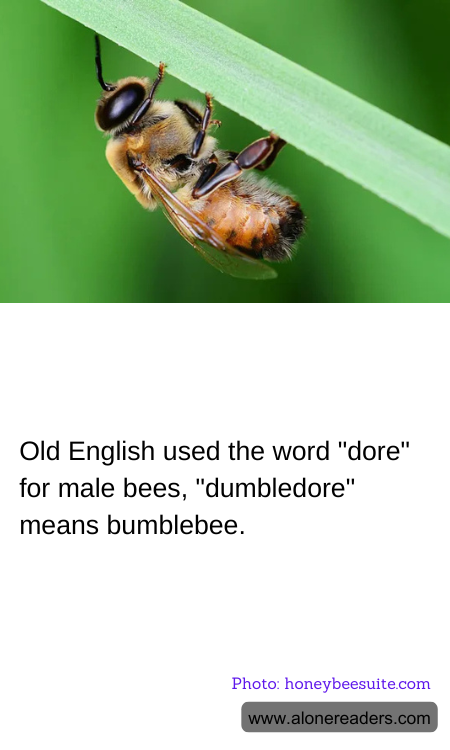
In the rich tapestry of the English language, words often carry with them stories of the past, revealing fascinating insights into history and culture. One such intriguing word is "dumbledore," which, in Old English, referred to a bumblebee. This whimsical term is a delightful example of how language evolves and how certain words can capture the imagination.
The word "dore" in Old English was used to describe male bees. This term, like many others from the period, has largely fallen out of everyday use, but it provides a glimpse into how our ancestors viewed the natural world. The addition of "dumble" to form "dumbledore" is believed to be an onomatopoeic representation, mimicking the buzzing sound made by these industrious insects. The combination of "dumble" and "dore" thus paints a vivid auditory picture, evoking the gentle hum of a bumblebee as it flits from flower to flower.
The charm of the word "dumbledore" extends beyond its etymological roots. It has been popularized in modern times by J.K. Rowling's Harry Potter series, where it is used as the surname of the beloved character Albus Dumbledore. Rowling herself has mentioned that she chose the name because she imagined the character humming to himself, much like a bumblebee. This connection between the word's original meaning and its literary usage underscores the enduring appeal of language and its capacity to transcend time.
The evolution of the word "dumbledore" from its Old English origins to its contemporary cultural significance is a testament to the dynamic nature of language. Words are not static; they adapt and transform, reflecting changes in society and culture. The story of "dumbledore" is a reminder of the beauty and complexity of language, where even the simplest of words can carry profound meaning and history.
For those interested in the history of language, the tale of "dumbledore" is a delightful example of how words can serve as bridges between the past and present. It invites us to explore the linguistic heritage that shapes our communication today and to appreciate the creativity inherent in the evolution of language. Whether encountered in the pages of a beloved book or in the gentle hum of a bumblebee, "dumbledore" continues to enchant and inspire, a small yet significant thread in the vast tapestry of the English language.
