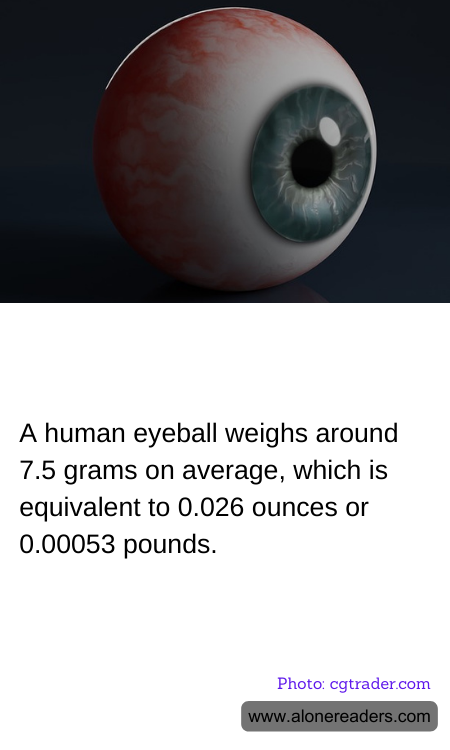
The human eye is a remarkable organ, not only for its ability to perceive the world around us but also for its intricate structure and function. One of the lesser-known facts about the human eye is its weight. On average, a human eyeball weighs approximately 7.5 grams, which is equivalent to 0.026 ounces or 0.00053 pounds. This seemingly insignificant weight belies the complexity and importance of the eye in our daily lives.
Despite its small size and light weight, the eye is a powerhouse of sensory input. It is composed of various parts, each with a specific role in the process of vision. The cornea, lens, retina, and optic nerve work in harmony to capture and transmit images to the brain, where they are processed and interpreted. The eye's ability to convert light into electrical signals is a marvel of biological engineering, allowing us to experience the world in vivid detail.
The weight of the eye is largely due to its composition of water, proteins, and other essential substances. The vitreous humor, a gel-like substance that fills the eye, contributes significantly to its weight. This clear gel helps maintain the eye's shape and provides a medium through which light can pass to reach the retina. The sclera, or the white part of the eye, is a tough, fibrous layer that provides protection and structural support, adding to the overall weight of the eyeball.
Understanding the weight of the human eye can also offer insights into its vulnerability. Given its delicate nature, the eye is susceptible to various injuries and conditions that can affect vision. Protective measures, such as wearing sunglasses to shield against harmful UV rays or using safety goggles during activities that pose a risk to the eyes, are essential to maintaining eye health. Regular eye check-ups can also help detect and address potential issues early, preserving the eye's function and well-being.
The eye's weight is a testament to its efficiency and design. Despite being one of the lighter organs in the human body, it plays a crucial role in our sensory experience. Its ability to function seamlessly, often without conscious thought, is a reminder of the incredible capabilities of the human body. As we continue to explore and understand more about the eye, we gain a deeper appreciation for this small yet mighty organ that shapes our perception of the world.
