In the fascinating world of bees, communication is key to the survival and efficiency of the hive. One of the most intriguing aspects of bee behavior is their ability to convey information about the location of food sources through a series of movements known as the "waggle dance." This dance is not just a random display but a sophisticated method of communication that has intrigued scientists and nature enthusiasts alike.
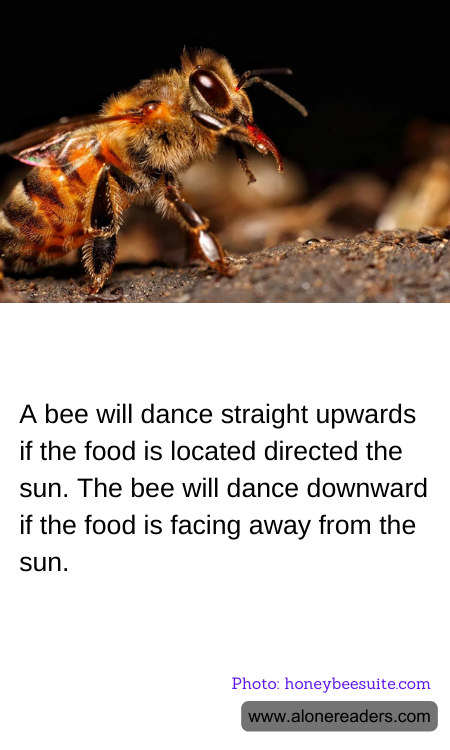
When a foraging bee discovers a rich source of nectar or pollen, it returns to the hive to share this valuable information with its fellow bees. The bee performs a dance on the vertical surface of the honeycomb, which consists of a series of figure-eight movements. The direction in which the bee dances is crucial, as it indicates the direction of the food source relative to the sun. If the food is located in the direction of the sun, the bee will dance straight upwards. This upward movement is a clear signal to the other bees that they should fly towards the sun to find the food.
Conversely, if the food source is located away from the sun, the bee will dance downward. This downward movement tells the other bees to fly in the opposite direction of the sun. The angle at which the bee dances in relation to the vertical comb corresponds to the angle between the food source and the sun. This precise method allows bees to communicate complex spatial information effectively, even in the absence of visual cues.
The waggle dance is not just about direction; it also conveys information about distance. The duration of the waggle phase of the dance indicates how far the food source is from the hive. A longer waggle phase suggests a more distant source, while a shorter waggle phase indicates a closer one. This dual communication of direction and distance enables bees to efficiently locate food sources, maximizing their foraging efforts and supporting the hive's nutritional needs.
Understanding the waggle dance provides insight into the remarkable intelligence and social structure of bees. It highlights the importance of cooperation and communication in nature, where even the smallest creatures have developed complex systems to thrive. This dance is a testament to the intricate balance of ecosystems and the vital role bees play in pollination and biodiversity.
For those who observe bees, whether in a garden or a research setting, the waggle dance is a reminder of the wonders of nature and the intricate ways in which life communicates and sustains itself. As we continue to study and protect these essential pollinators, the waggle dance remains a symbol of the delicate interplay between organisms and their environment, urging us to appreciate and preserve the natural world.
