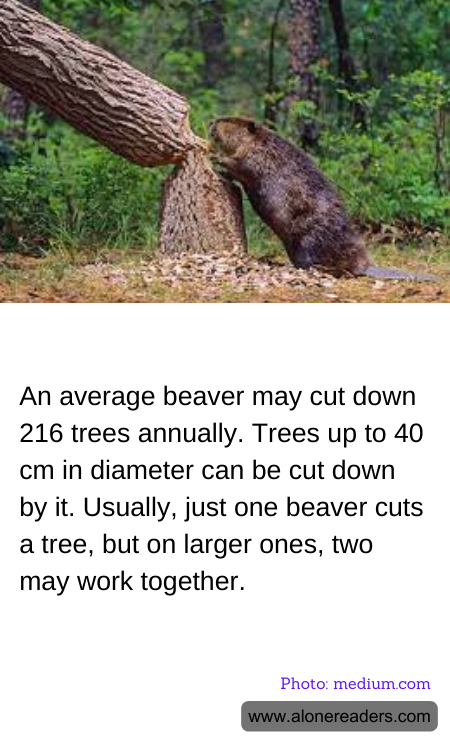
In the serene landscapes of North America and parts of Europe, the industrious beaver plays a pivotal role in shaping its environment. Known for their remarkable engineering skills, beavers are nature's architects, transforming landscapes with their dam-building prowess. One fascinating aspect of their behavior is their ability to fell trees, a task they undertake with surprising efficiency and purpose.
An average beaver can cut down approximately 216 trees annually. This impressive feat is not merely a random act of nature but a deliberate and essential activity for their survival and habitat creation. Beavers rely on trees not only for building their dams and lodges but also as a primary food source. The bark, twigs, and leaves provide essential nutrients, especially during the harsh winter months when other food sources are scarce.
Beavers are equipped with strong, sharp teeth that allow them to gnaw through wood with ease. They can cut down trees up to 40 centimeters in diameter, showcasing their strength and determination. Typically, a single beaver is capable of felling a tree on its own. However, when faced with larger trees, teamwork comes into play. In such cases, two beavers may collaborate, demonstrating their ability to work together to achieve a common goal.
The impact of beaver activity extends beyond their immediate needs. By cutting down trees and building dams, beavers create wetlands, which are vital ecosystems that support a diverse range of wildlife. These wetlands help in water purification, flood control, and provide habitats for numerous species, including fish, birds, and amphibians. In this way, beavers contribute significantly to biodiversity and environmental health.
Despite their ecological benefits, beaver activity can sometimes conflict with human interests, particularly in areas where their tree-felling habits may impact agriculture or infrastructure. However, understanding and appreciating the role of beavers in the ecosystem can lead to more harmonious coexistence. Solutions such as beaver deceivers—devices that manage water levels without harming the animals—are examples of how humans can adapt to and accommodate these industrious creatures.
In conclusion, the beaver's ability to cut down trees is a testament to its role as a keystone species in its habitat. By reshaping landscapes, beavers not only ensure their own survival but also enhance the ecological richness of their surroundings. Their activities remind us of the intricate balance of nature and the importance of each species in maintaining the health of our planet. As we continue to learn from and about these remarkable animals, we gain a deeper appreciation for the natural world and our place within it.
