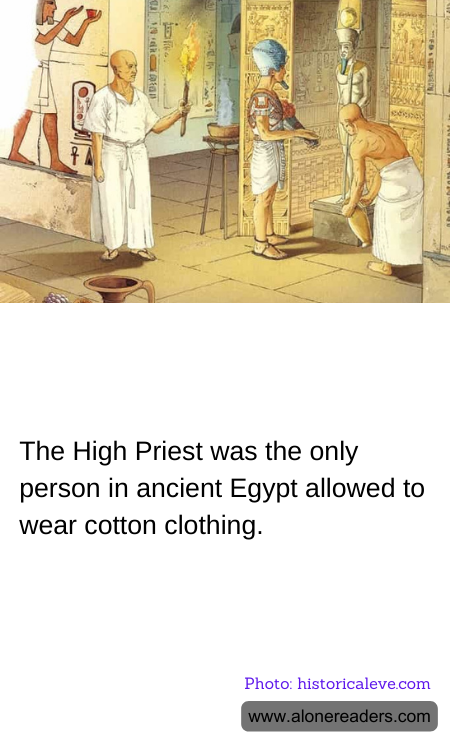
In the vibrant tapestry of ancient Egyptian civilization, clothing was not merely a matter of practicality or fashion; it was a symbol of status, religious significance, and cultural identity. Among the various fabrics used in ancient Egypt, linen was the most common due to its availability and suitability for the hot climate. However, there was one fabric that held a unique and exclusive status: cotton. In ancient Egypt, cotton was a rare and precious material, and its use was restricted to a select few, most notably the High Priest.
The High Priest in ancient Egypt occupied a position of immense power and reverence, serving as the intermediary between the gods and the people. This role required not only spiritual dedication but also a representation of purity and divine favor. The exclusivity of cotton clothing for the High Priest can be seen as a reflection of these attributes. Cotton, being less common than linen, was considered a luxury, and its use by the High Priest underscored his elevated status and connection to the divine.
The rarity of cotton in ancient Egypt can be attributed to its limited cultivation and the complexities involved in its production. Unlike linen, which was made from flax plants grown abundantly along the Nile, cotton required specific growing conditions and was not native to the region. It is believed that cotton was introduced to Egypt through trade with regions where it was more commonly grown, such as India. This scarcity made cotton a symbol of wealth and exclusivity, further enhancing its association with the High Priest.
The choice of cotton for the High Priest's garments was not solely based on its rarity. Cotton's texture and appearance also played a role in its selection. The fabric's softness and ability to be woven into fine, delicate cloth made it suitable for the ceremonial attire of the High Priest. These garments were often adorned with intricate designs and embellishments, reflecting the grandeur and sacredness of the priestly office. The use of cotton in this context was a testament to the High Priest's role as a custodian of religious rituals and a figure of spiritual authority.
In conclusion, the exclusive use of cotton clothing by the High Priest in ancient Egypt was a multifaceted symbol of religious, social, and cultural significance. It highlighted the priest's unique position within society and his connection to the divine realm. This practice underscores the intricate relationship between material culture and religious identity in ancient Egypt, offering a glimpse into how the ancients used clothing to convey power, privilege, and piety. As we explore the remnants of this ancient civilization, the story of the High Priest's cotton garments continues to captivate and inspire, reminding us of the rich tapestry of beliefs and traditions that shaped one of history's most fascinating cultures.
