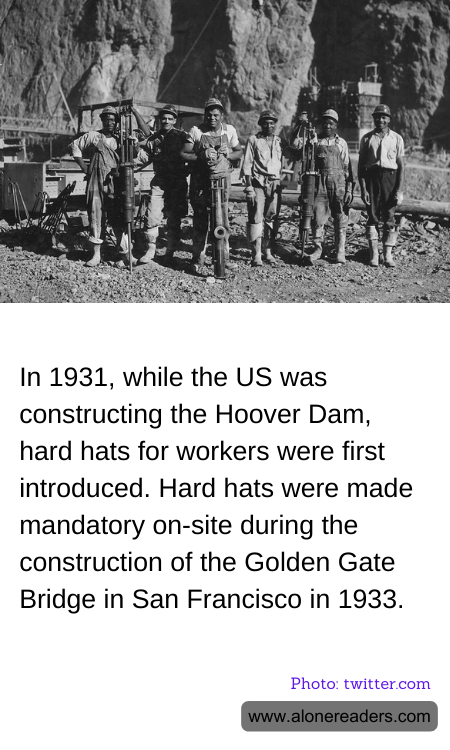
In the early 1930s, the United States was a nation in the throes of transformation, marked by ambitious engineering projects that would come to symbolize American ingenuity and resilience. Among these monumental undertakings were the construction of the Hoover Dam and the Golden Gate Bridge, both of which not only pushed the boundaries of engineering but also heralded significant advancements in worker safety, notably the introduction and mandatory use of hard hats.
The Hoover Dam, constructed between 1931 and 1936, was a colossal project that required thousands of workers to labor in harsh and hazardous conditions. The construction site was fraught with potential dangers, from falling debris to extreme temperatures. It was during this time that the concept of the hard hat was introduced to the workforce. These early hard hats were made from steamed canvas, glue, and black paint, designed to protect workers from head injuries. The introduction of hard hats at the Hoover Dam marked a pivotal moment in industrial safety, setting a precedent for future construction projects.
Just two years later, in 1933, the construction of the Golden Gate Bridge in San Francisco began. This project was equally ambitious and perilous, involving work at dizzying heights over the turbulent waters of the San Francisco Bay. Recognizing the inherent dangers, Chief Engineer Joseph Strauss made the unprecedented decision to mandate the use of hard hats for all workers on the site. This was the first time in history that hard hats were made compulsory on a construction project, reflecting a growing awareness of the importance of worker safety.
The decision to require hard hats during the construction of the Golden Gate Bridge was part of a broader safety program implemented by Strauss, which also included the use of safety nets and other protective measures. These innovations significantly reduced the number of fatalities and injuries, setting new standards for construction safety. The success of these measures demonstrated the effectiveness of protective gear and paved the way for the widespread adoption of hard hats in various industries.
The introduction and mandatory use of hard hats during these iconic construction projects were not just about compliance with safety regulations; they represented a cultural shift towards valuing human life and well-being in the workplace. Today, hard hats are a ubiquitous symbol of safety, worn by millions of workers across the globe in construction, mining, and other hazardous industries. They serve as a reminder of the progress made in occupational safety and the ongoing commitment to protecting workers from harm.
As we reflect on the legacy of the Hoover Dam and the Golden Gate Bridge, it is clear that their impact extends beyond their architectural and engineering achievements. These projects played a crucial role in shaping modern safety standards, highlighting the importance of innovation and foresight in safeguarding the lives of those who build the world around us.
