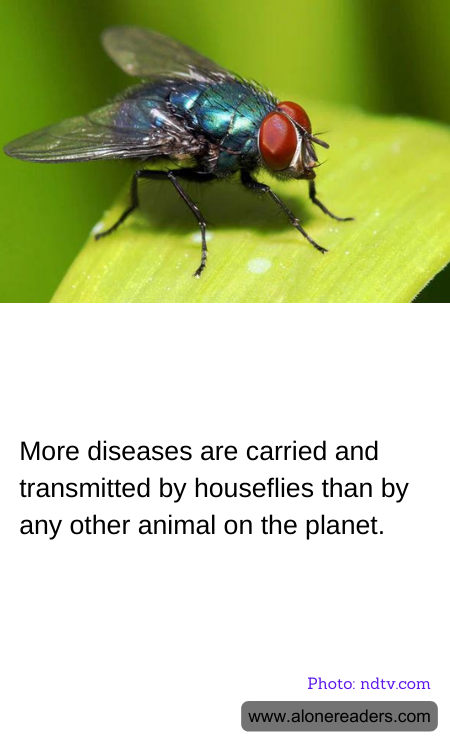
Houseflies, often seen as mere nuisances buzzing around our homes, are far more than just an annoyance. These small insects are, in fact, one of the most prolific carriers and transmitters of diseases on the planet. Their ability to spread a wide array of pathogens makes them a significant public health concern globally.
Houseflies thrive in environments rich in organic waste, such as garbage dumps, animal farms, and human habitations. This preference for unsanitary conditions is precisely what makes them such effective vectors for disease. As they move from one surface to another, houseflies pick up pathogens on their bodies and in their digestive tracts. These pathogens can include bacteria, viruses, fungi, and parasites, all of which can cause serious illnesses in humans and animals.
One of the most concerning aspects of houseflies is their ability to carry over 100 different pathogens. These include bacteria such as Salmonella, Escherichia coli, and Shigella, which are responsible for food poisoning and dysentery. They can also transmit viruses like the poliovirus and parasites that cause diseases such as giardiasis. The transmission occurs when flies land on food or surfaces that humans come into contact with, leaving behind traces of these harmful microorganisms.
The life cycle of a housefly is rapid, allowing populations to grow quickly and spread diseases efficiently. A single female fly can lay hundreds of eggs in her short lifespan, leading to exponential growth in fly populations if conditions are favorable. This rapid reproduction, combined with their ability to travel several miles in search of food, makes controlling housefly populations a challenging task.
Preventing the spread of diseases by houseflies requires a multifaceted approach. Maintaining cleanliness in and around homes is crucial. This includes proper waste disposal, regular cleaning of surfaces, and ensuring that food is covered and stored correctly. Installing screens on windows and doors can help keep flies out of living spaces, while using fly traps and insecticides can reduce their numbers.
Public awareness and education are also vital in combating the health risks posed by houseflies. Understanding the potential dangers these insects pose can encourage communities to adopt better hygiene practices and support public health initiatives aimed at controlling fly populations.
In conclusion, while houseflies may seem insignificant compared to larger animals, their role as vectors of disease is unparalleled. Their ability to carry and transmit a vast array of pathogens makes them a formidable threat to public health. By taking proactive measures to control their populations and minimize their contact with humans, we can significantly reduce the risk of disease transmission and protect our communities from the illnesses these tiny insects can spread.
