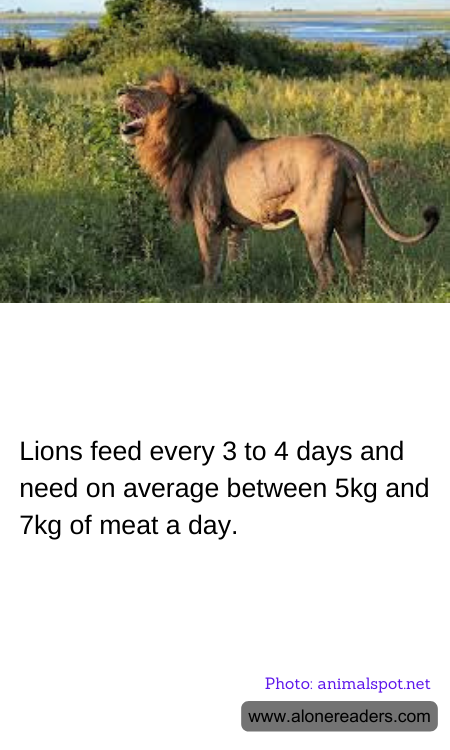
Lions, often referred to as the kings of the jungle, are majestic creatures that captivate the imagination with their strength and regal presence. These magnificent big cats are not only fascinating to observe but also intriguing in their dietary habits. Unlike many animals that eat daily, lions have a unique feeding pattern that sees them consuming large quantities of meat every few days.
Typically, lions feed every three to four days, a schedule that aligns with their hunting success and the availability of prey. This feeding pattern is a result of their role as apex predators in the wild. Lions are opportunistic hunters, often relying on the element of surprise to catch their prey. Their diet primarily consists of large herbivores such as zebras, wildebeests, and buffaloes. When a hunt is successful, a lion can consume a substantial amount of meat in one sitting, sometimes eating up to 30 kilograms in a single meal. This ability to gorge allows them to sustain themselves over several days without the need for daily feeding.
On average, a lion requires between 5 to 7 kilograms of meat per day to maintain its energy levels and overall health. This daily requirement, however, is not met through daily feeding but rather through the large quantities consumed during their sporadic meals. The lion's digestive system is well-adapted to this feast-and-famine lifestyle, efficiently processing the meat to extract the necessary nutrients and energy.
The social structure of lions also plays a significant role in their feeding habits. Lions live in prides, which are family units consisting of related females, their offspring, and a small number of adult males. Within the pride, there is a hierarchy that influences feeding order. Typically, males eat first, followed by females and then the cubs. This hierarchy ensures that the strongest members of the pride are well-fed, which is crucial for the protection and survival of the group.
Lions' feeding habits are not only a testament to their adaptability but also a reflection of the harsh realities of life in the wild. Their ability to survive on such a feeding schedule is a remarkable adaptation that allows them to thrive in environments where food availability can be unpredictable. This feeding strategy also highlights the importance of conservation efforts to ensure that these majestic creatures continue to have access to their natural habitats and prey.
Understanding the dietary habits of lions provides valuable insight into their behavior and ecology. It underscores the delicate balance of nature and the intricate relationships between predators and their prey. As we continue to learn more about these incredible animals, it becomes increasingly clear that every aspect of their existence, from their feeding habits to their social structures, is finely tuned to ensure their survival in the wild.
