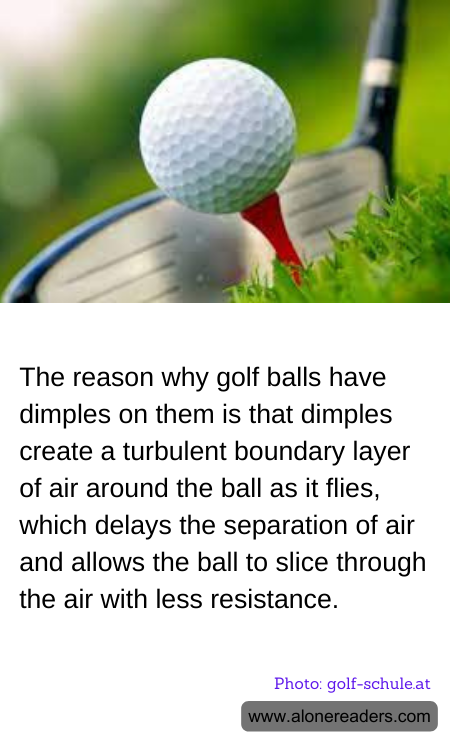
Golf is a sport that combines precision, skill, and a touch of science. One of the most intriguing aspects of golf equipment is the design of the golf ball. At first glance, the dimples on a golf ball might seem like a simple design choice, but they play a crucial role in the ball's performance. The reason golf balls have dimples is rooted in aerodynamics, specifically in how they interact with the air as they soar through the sky.
When a golf ball is struck, it travels through the air, encountering resistance known as drag. This drag can significantly affect the distance and accuracy of the shot. The dimples on a golf ball are not just for aesthetics; they are meticulously designed to manage this drag by creating a turbulent boundary layer of air around the ball. This turbulent layer is key to improving the ball's flight.
In aerodynamics, a smooth surface might seem ideal for reducing drag, but in the case of a golf ball, it is the opposite. A smooth ball would create a laminar flow of air, which separates from the ball's surface more quickly, leading to a larger wake and increased drag. Dimples, however, disrupt this smooth flow, creating turbulence. This turbulent boundary layer clings to the ball's surface longer, delaying the separation of air. As a result, the wake behind the ball is smaller, and the drag is reduced.
This reduction in drag allows the ball to travel further and more accurately. The dimples essentially enable the ball to slice through the air with less resistance, enhancing its flight characteristics. This is why golf balls can achieve impressive distances even with relatively modest swings. The science behind the dimples is a perfect example of how understanding and applying principles of physics can lead to significant improvements in sports equipment.
Moreover, the number, size, and pattern of dimples can vary between different golf balls, each designed to optimize performance for different playing conditions and player preferences. Some balls may have more dimples to enhance control, while others might focus on maximizing distance. This variety allows golfers to choose a ball that best suits their playing style and the specific demands of the course.
In conclusion, the dimples on a golf ball are a testament to the intricate relationship between sports and science. They illustrate how a deep understanding of aerodynamics can transform a simple object into a finely tuned piece of sports equipment. Whether you're a seasoned golfer or a curious observer, the next time you see a golf ball, you'll know that those little dimples are doing a lot more than meets the eye. They are the unsung heroes that help golfers achieve their best performance on the course.
