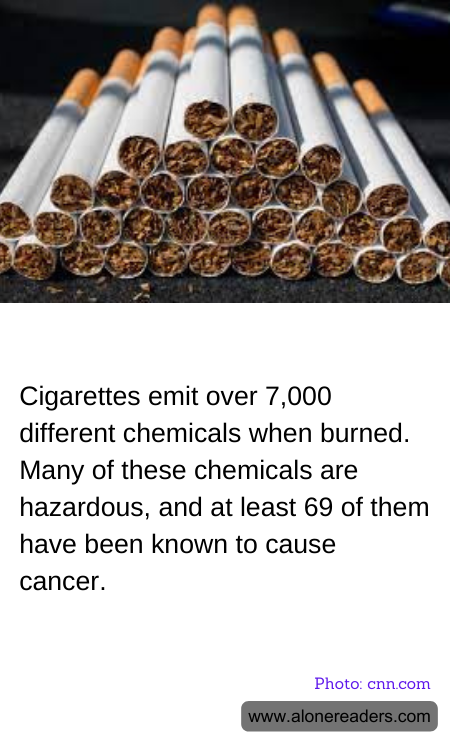
Cigarettes have long been a subject of public health concern, and for good reason. When a cigarette is lit, it becomes a small but potent chemical factory, emitting over 7,000 different chemicals into the air. This staggering number is not just a statistic; it represents a complex cocktail of substances that can have serious implications for human health. Among these chemicals, at least 69 are known carcinogens, meaning they have the potential to cause cancer.
The process of burning tobacco releases a variety of harmful substances, including tar, carbon monoxide, and nicotine. Tar, a sticky, brown substance, is one of the most notorious components, known for staining teeth and damaging lung tissue. Carbon monoxide, a colorless and odorless gas, can interfere with the body's ability to transport oxygen, leading to cardiovascular issues. Nicotine, while primarily known for its addictive properties, also contributes to the harmful effects of smoking by increasing heart rate and blood pressure.
Beyond these well-known substances, cigarettes also release a host of lesser-known but equally dangerous chemicals. For example, formaldehyde, a chemical used in embalming, is present in cigarette smoke and is a recognized carcinogen. Benzene, found in gasoline, and arsenic, a component of rat poison, are also part of the toxic mix. These chemicals can damage DNA, disrupt cellular processes, and ultimately lead to the development of cancerous cells.
The impact of these chemicals is not limited to smokers alone. Secondhand smoke, the smoke exhaled by smokers and the smoke from the burning end of a cigarette, contains many of the same harmful chemicals. Non-smokers who are exposed to secondhand smoke are at risk of developing similar health issues, including respiratory problems and cancer. This makes smoking not just a personal health issue but a public health concern that affects everyone.
Efforts to reduce smoking rates and exposure to cigarette smoke have been ongoing for decades. Public health campaigns, smoking bans in public places, and increased taxation on tobacco products have all contributed to a decline in smoking rates in many parts of the world. However, the battle is far from over. The addictive nature of nicotine and the social and cultural factors that contribute to smoking make it a persistent challenge.
Understanding the chemical complexity of cigarette smoke underscores the importance of continued efforts to reduce smoking and protect public health. By raising awareness of the dangers posed by these chemicals, we can encourage individuals to make informed choices about their health and advocate for policies that protect communities from the harmful effects of tobacco smoke.
