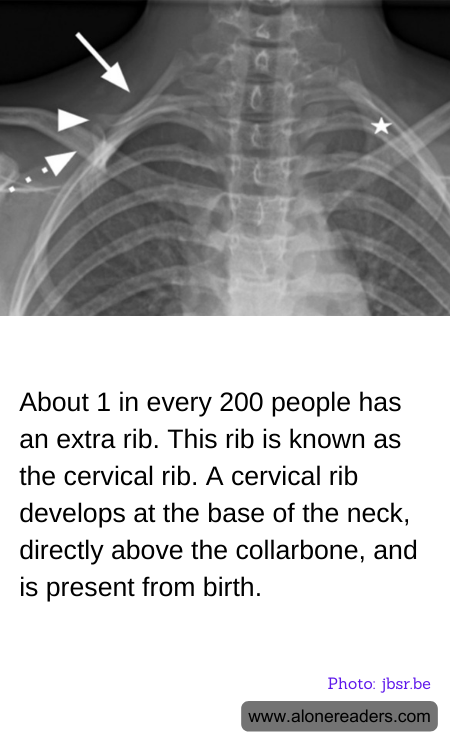
In the intricate tapestry of human anatomy, there are countless variations that make each individual unique. One such variation is the presence of an extra rib, known as the cervical rib. This anatomical anomaly occurs in about 1 in every 200 people, making it a relatively rare condition. The cervical rib develops at the base of the neck, directly above the collarbone, and is present from birth.
The cervical rib is an additional rib that arises from the seventh cervical vertebra, which is located in the neck. While most people have 12 pairs of ribs, those with a cervical rib have an extra one, bringing their total to 13 pairs. This extra rib can vary in size; in some individuals, it is a fully formed bony structure, while in others, it may be a small, fibrous band of tissue.
For many people with a cervical rib, this condition goes unnoticed throughout their lives, as it often does not cause any symptoms. However, in some cases, the presence of a cervical rib can lead to a condition known as thoracic outlet syndrome (TOS). This occurs when the rib compresses nerves or blood vessels in the thoracic outlet, the space between the collarbone and the first rib. Symptoms of TOS can include pain, numbness, or tingling in the neck, shoulder, arm, or hand, as well as weakness in the affected limb.
Diagnosis of a cervical rib is typically made through imaging studies such as X-rays, CT scans, or MRIs, which can clearly show the presence of the extra rib. If a person experiences symptoms related to thoracic outlet syndrome, a healthcare provider may recommend physical therapy, pain management strategies, or, in some cases, surgical intervention to remove the rib and alleviate pressure on the affected nerves or blood vessels.
Despite its potential to cause discomfort, the cervical rib is a fascinating example of the diversity found within human anatomy. It serves as a reminder of the complex and varied nature of our bodies, highlighting the fact that even seemingly minor differences can have significant implications for health and well-being. For those living with a cervical rib, awareness and understanding of the condition can be key to managing any associated symptoms and maintaining a good quality of life.
In conclusion, the cervical rib is a rare anatomical feature that underscores the uniqueness of each individual. While it may pose challenges for some, it also offers an opportunity to appreciate the remarkable intricacies of the human body. Whether it remains a silent companion or requires medical attention, the cervical rib is a testament to the endless variations that make us who we are.
