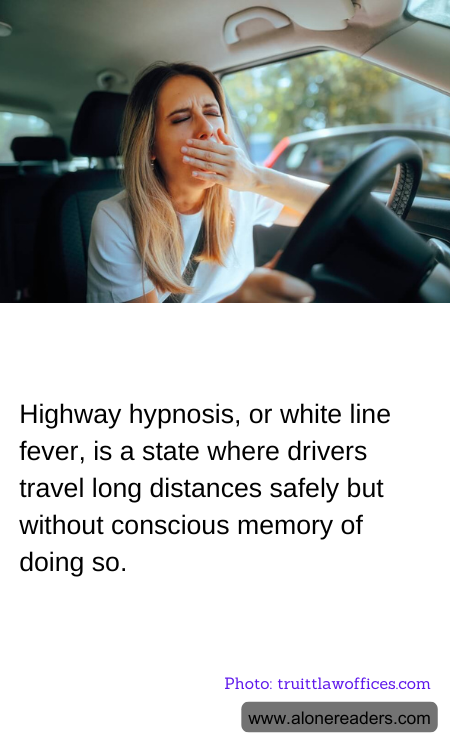
Highway hypnosis, also known as white line fever, is a fascinating phenomenon that many drivers experience during long road trips. It is a mental state where a person can drive a vehicle over long distances without any recollection of the journey. Despite the lack of conscious memory, drivers often manage to navigate safely, adhering to traffic rules and responding to road conditions. This intriguing state of mind raises questions about the human brain's ability to function on autopilot.
The concept of highway hypnosis is not new. It was first identified in the 1920s and has since been the subject of numerous studies. The condition is akin to daydreaming, where the mind wanders while the body continues to perform routine tasks. In the case of driving, the brain enters a semi-automatic mode, allowing the driver to operate the vehicle without actively thinking about each action. This is possible because driving, for many, becomes a habitual activity, much like walking or riding a bicycle.
Several factors contribute to highway hypnosis. Long stretches of monotonous roads, such as highways with little variation in scenery, can lull drivers into this trance-like state. The rhythmic pattern of the white lines on the road, the hum of the engine, and the steady speed can all contribute to a sense of relaxation that leads to reduced alertness. Fatigue, lack of sleep, and driving during late hours can exacerbate the condition, making it more likely for drivers to slip into this state.
While highway hypnosis might sound alarming, it is important to note that it does not necessarily compromise safety. The brain's ability to switch to autopilot allows drivers to continue performing necessary tasks, such as steering, braking, and maintaining speed. However, it is crucial for drivers to remain vigilant and take steps to prevent prolonged periods of highway hypnosis. Regular breaks, staying hydrated, and engaging in activities that require mental focus, such as listening to music or podcasts, can help maintain alertness.
Understanding highway hypnosis is essential for promoting road safety. By recognizing the signs and taking preventive measures, drivers can ensure that they remain attentive and responsive throughout their journey. As technology advances, features such as lane departure warnings and adaptive cruise control are becoming more common in vehicles, providing additional layers of safety for drivers who might experience highway hypnosis.
In conclusion, highway hypnosis is a testament to the human brain's remarkable ability to adapt and function in various states of consciousness. While it allows for the continuation of routine tasks, it is vital for drivers to be aware of its occurrence and take proactive steps to stay alert. By doing so, they can enjoy the journey while ensuring their safety and the safety of others on the road.
