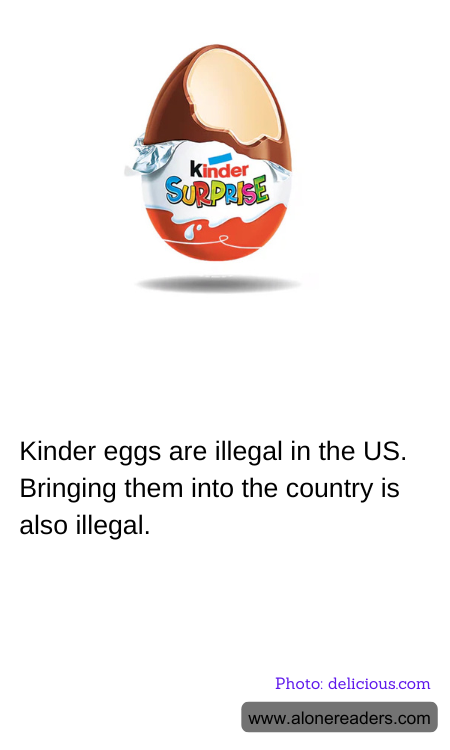
Kinder eggs, the popular chocolate treats with a surprise toy inside, are beloved by children and adults around the world. However, many people are surprised to learn that these confections are illegal in the United States. The ban on Kinder eggs is not due to any health concerns related to the chocolate itself, but rather the small toy hidden inside, which has raised safety concerns.
The U.S. Consumer Product Safety Commission (CPSC) enforces strict regulations on toys and products that could pose a choking hazard to children. According to the Federal Food, Drug, and Cosmetic Act, it is illegal to sell any food product that contains a non-nutritive object embedded within it. Kinder eggs fall under this category because the toy is encased within the chocolate shell, making it inaccessible until the chocolate is consumed. This design poses a potential risk, especially to young children who might inadvertently swallow the toy.
Despite the ban, Kinder eggs remain a sought-after item for collectors and chocolate enthusiasts in the U.S. Many people are unaware of the legal implications of bringing these treats into the country. U.S. Customs and Border Protection (CBP) actively enforces the ban, and travelers attempting to bring Kinder eggs into the United States may face confiscation of the product and potential fines. In some cases, individuals have been fined up to $2,500 per egg for attempting to import them.
The ban has led to some confusion, particularly because Kinder eggs are widely available in other countries, including Canada and many European nations. To cater to the U.S. market, Ferrero, the company behind Kinder eggs, introduced a modified version called Kinder Joy. Unlike the original, Kinder Joy separates the toy from the chocolate, packaging them in two distinct halves. This design complies with U.S. regulations, allowing American consumers to enjoy a similar experience without violating the law.
While the ban on Kinder eggs may seem unusual to some, it highlights the importance of consumer safety and the lengths to which regulatory bodies will go to protect children from potential hazards. As global travel and trade continue to increase, it is essential for consumers to be aware of the laws and regulations that govern the products they wish to bring into the country. Understanding these rules can help avoid unnecessary fines and ensure that everyone can enjoy their favorite treats safely and legally.
