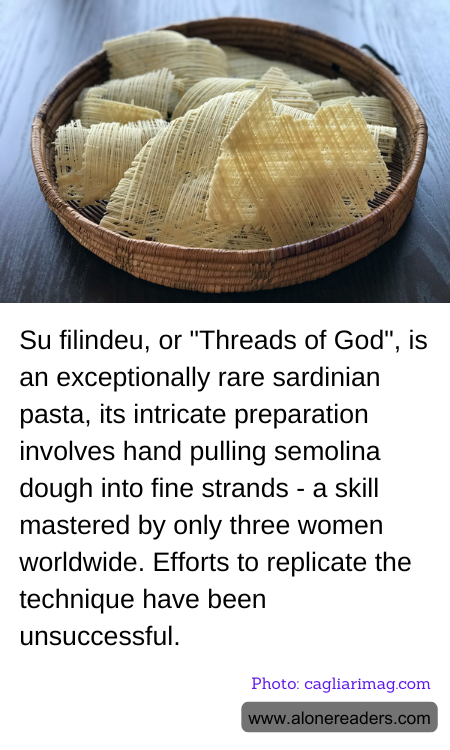
In the heart of Sardinia, an island renowned for its rich culinary heritage, lies a gastronomic treasure that has captivated the world with its rarity and complexity: Su filindeu, or "Threads of God." This extraordinary pasta is not just a dish but a testament to the artistry and dedication of those who craft it. Its creation is a closely guarded tradition, mastered by only three women globally, making it one of the rarest pastas in existence.
The process of making Su filindeu is as intricate as it is fascinating. It begins with semolina dough, which is meticulously hand-pulled into impossibly fine strands. These strands are then woven into a delicate, lace-like pattern, a skill that requires years of practice and an almost meditative focus. The dough is stretched and folded multiple times, each movement precise and deliberate, until it reaches the desired thinness. The resulting threads are then layered in a crisscross pattern, forming a unique texture that is both visually stunning and texturally distinct.
Despite numerous attempts by chefs and culinary enthusiasts to replicate this technique, the secret of Su filindeu remains elusive. The few who have tried to master it often find themselves humbled by the complexity and precision required. It is not merely a matter of following a recipe; it is an art form that demands an intuitive understanding of the dough's elasticity and a deep respect for the tradition it represents.
The rarity of Su filindeu is not just due to the skill required to make it but also because of its cultural significance. It is traditionally prepared for the Feast of San Francesco, a religious pilgrimage in the town of Lula, Sardinia. For those fortunate enough to partake in this sacred dish, it is typically served in a simple broth, allowing the delicate texture and subtle flavor of the pasta to shine.
Efforts to preserve this culinary heritage have been ongoing, with the three women who hold the knowledge of Su filindeu's creation passing their skills to the next generation. However, the challenge remains significant, as the younger generation often moves away from traditional practices in search of modern opportunities. This has sparked a sense of urgency among culinary historians and cultural preservationists to document and safeguard the technique before it fades into obscurity.
Su filindeu is more than just a rare pasta; it is a symbol of Sardinia's rich cultural tapestry and the enduring legacy of its people. As the world becomes increasingly fascinated by this culinary marvel, it serves as a poignant reminder of the importance of preserving traditional crafts and the stories they tell. In a world where convenience often trumps craftsmanship, Su filindeu stands as a beacon of dedication, artistry, and the timeless beauty of handmade traditions.
