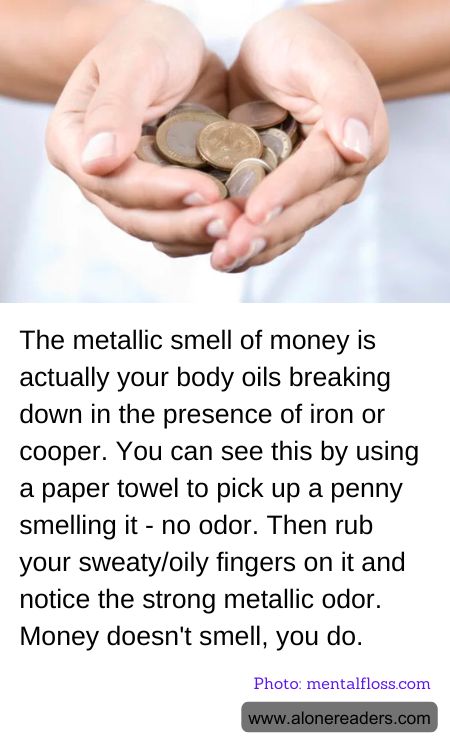
The familiar metallic smell often associated with handling coins, particularly pennies, has long been a topic of curiosity. Many people assume that this distinctive odor emanates directly from the coins themselves. However, the truth is more intriguing: the smell is not from the metal but rather a result of a chemical reaction between the metal and the oils on our skin.
When you handle coins, especially those made of iron or copper, the oils and sweat from your skin interact with the metal's surface. This interaction causes a breakdown of the oils, leading to the formation of volatile organic compounds. These compounds are what we perceive as the metallic smell. Interestingly, if you were to pick up a penny using a paper towel and then smell it, you would notice no significant odor. The scent only becomes apparent when your skin's natural oils come into contact with the metal.
This phenomenon is a fascinating example of how our bodies can influence our sensory experiences. The human skin secretes oils and sweat, which contain various organic compounds. When these compounds meet the metal ions on a coin's surface, they undergo a chemical transformation. This transformation releases a specific set of compounds that our noses interpret as a metallic scent. Essentially, the smell we associate with money is a byproduct of our own biology interacting with the environment.
Understanding this process can change the way we think about everyday objects and their interactions with our bodies. It highlights the complex chemistry that occurs in seemingly mundane situations. This knowledge can also be a fun fact to share, offering a new perspective on why coins smell the way they do. It’s not the money that has a scent; it’s the unique interplay between the metal and our skin.
This insight into the metallic smell of money also underscores the importance of personal hygiene and cleanliness. Since the odor is a result of oils and sweat, maintaining clean hands can minimize the intensity of the smell. It also serves as a reminder of the fascinating ways in which our bodies interact with the world around us, often in ways we might not expect.
In conclusion, the next time you catch a whiff of that metallic scent after handling coins, remember that it's not the money itself that smells. It's a testament to the remarkable chemistry happening right at your fingertips, a small but intriguing intersection of biology and chemistry that adds a layer of wonder to the everyday act of handling change.
