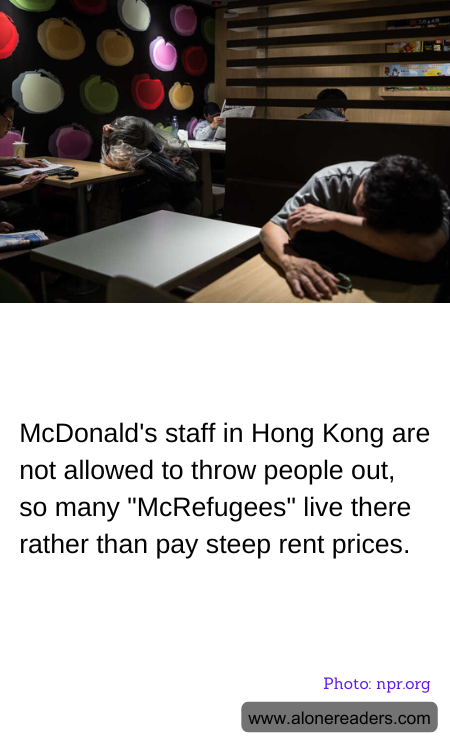
In the bustling metropolis of Hong Kong, where the skyline is dotted with skyscrapers and the streets are alive with the hum of activity, an unexpected sanctuary has emerged for those seeking refuge from the city's exorbitant housing costs. McDonald's, the global fast-food giant, has inadvertently become a haven for a group of individuals known as "McRefugees." These are people who, unable to afford the steep rent prices, find solace in the 24-hour warmth and safety of McDonald's outlets.
Hong Kong is notorious for its sky-high property prices, which have made affordable housing a distant dream for many of its residents. The city consistently ranks as one of the most expensive places to live in the world, with rental costs often consuming a significant portion of an individual's income. For those on the lower end of the economic spectrum, finding a place to live can be an insurmountable challenge. This is where McDonald's, with its policy of not expelling customers, plays an unexpected role in the urban landscape.
The phenomenon of McRefugees is not new, but it has gained increased attention in recent years as the housing crisis in Hong Kong has worsened. These individuals, who range from the homeless to low-income workers, find McDonald's to be a safe and accessible place to rest. The fast-food chain's 24-hour service provides a rare opportunity for uninterrupted shelter, offering a reprieve from the harsh realities of life on the streets. For many, it is a temporary solution, a place to sleep without fear of being moved along or harassed.
While McDonald's has not officially sanctioned this use of their premises, their staff are generally instructed not to disturb customers who are not causing trouble. This unofficial tolerance has allowed McRefugees to blend into the background of the bustling restaurants, often unnoticed by other patrons. The presence of McRefugees highlights a stark contrast between the city's wealth and the struggles of its less fortunate residents. It underscores the urgent need for more affordable housing solutions and social support systems to address the growing divide.
The situation has sparked debate among Hong Kong's citizens and policymakers. Some argue that the government should take more decisive action to provide affordable housing and support for those in need. Others believe that businesses like McDonald's should not be burdened with the responsibility of acting as de facto shelters. Regardless of the differing opinions, the reality remains that for many, McDonald's is more than just a place to grab a quick meal; it is a lifeline in a city where the cost of living continues to rise unabated.
As Hong Kong grapples with its housing crisis, the story of the McRefugees serves as a poignant reminder of the human impact behind the statistics. It calls for a compassionate response and innovative solutions to ensure that everyone has access to safe and affordable housing. Until then, the golden arches of McDonald's will continue to offer a glimmer of hope to those who have nowhere else to turn.
