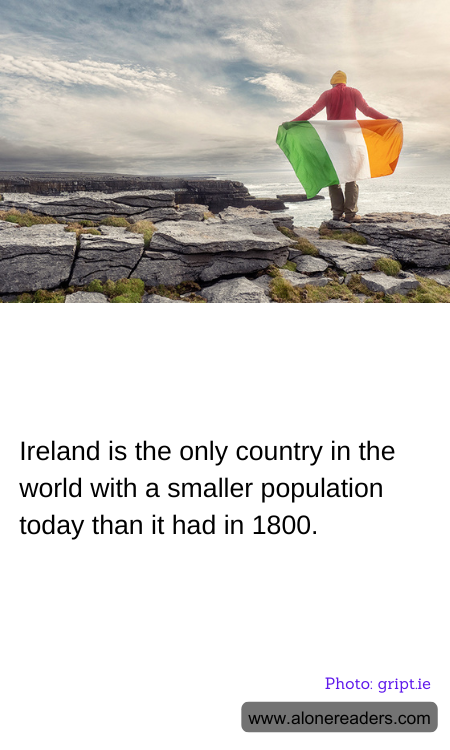
Ireland presents a unique demographic narrative that sets it apart from every other nation in the world. Unlike most countries, which have seen their populations grow significantly over the past two centuries, Ireland's population today is smaller than it was in 1800. This intriguing phenomenon is rooted in a complex history of socio-economic challenges, emigration, and cultural shifts that have shaped the island's demographic landscape.
In the early 19th century, Ireland's population was on the rise, reaching over 8 million by the 1840s. However, the Great Famine of 1845-1852, a catastrophic event caused by potato crop failures, led to mass starvation and disease, drastically reducing the population. It is estimated that around one million people died during the famine, while another million emigrated to escape the dire conditions. This marked the beginning of a long-standing trend of emigration that would continue to impact Ireland's population for generations.
The legacy of the Great Famine left deep scars on the Irish psyche and economy. As the 19th century progressed, economic opportunities in Ireland remained limited, prompting many to seek better prospects abroad. The United States, Canada, Australia, and the United Kingdom became popular destinations for Irish emigrants. This exodus was not just a temporary response to the famine but a sustained movement that persisted well into the 20th century. By 1900, Ireland's population had dwindled to around 4.5 million, nearly half of what it had been before the famine.
Throughout the 20th century, Ireland continued to experience waves of emigration, driven by economic hardship and political unrest. The Irish War of Independence and subsequent civil war in the early 1920s further fueled emigration. Even as Ireland gained independence and began to develop its own identity, the lack of economic opportunities at home meant that many young Irish people still looked abroad for a brighter future.
In recent decades, Ireland has undergone significant economic transformation, particularly during the Celtic Tiger period of the 1990s and early 2000s, which saw rapid economic growth and an influx of immigrants. Despite these changes, the population has not yet returned to its pre-famine levels. As of the latest estimates, Ireland's population stands at just over 5 million, still below the peak it reached in the 19th century.
Ireland's unique demographic history serves as a poignant reminder of the profound impact that historical events can have on a nation's population. While the country has made remarkable strides in economic development and cultural revival, the echoes of its past continue to resonate. Today, Ireland is a vibrant nation with a rich cultural heritage, and its story of resilience and adaptation offers valuable lessons for understanding the complex interplay between history, migration, and population dynamics.
